Location, Location, Location #10

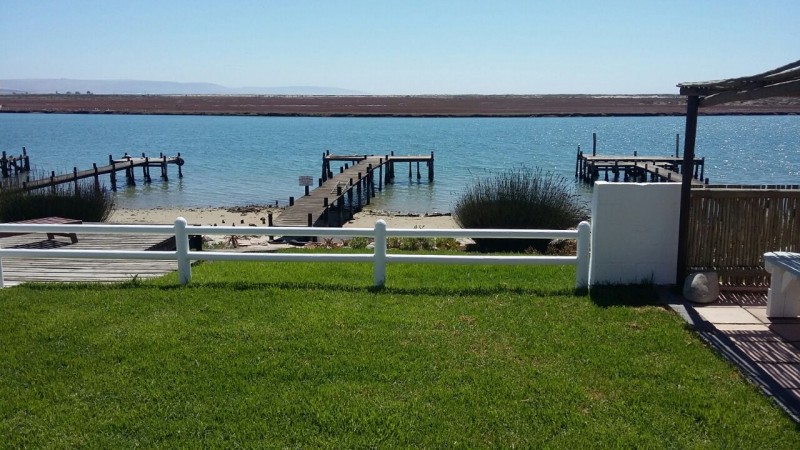
Location No. 10, Berg River, Laaiplek ยฉRiver Tides Guest House

In the latest stop on our literary tour through the pages of my novels, we’re taking a trip up the west coast of South Africa to a small town called Laaiplek, situated where the Berg River meets the Atlantic Ocean. This is the spot where my latest novel, Song of the Sea Goddess was conceived.

A visit to Mike Harvey’s lovely River Tides guest house just after New Year has become something of a tradition for us, although sadly our sundowners with Mike have had to be postponed this year with beaches and rivers out-of-bounds and travel between ‘hot-spots’ actively discouraged. But we will return.
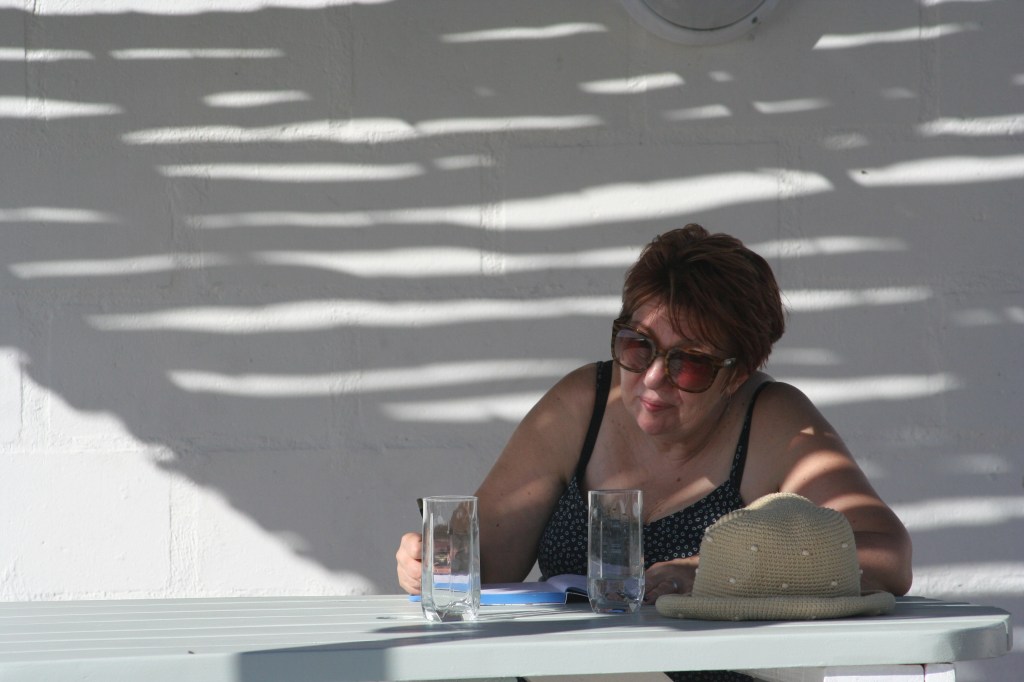
Here I am, back in January 2019, sitting on the shady bench on the right hand side of the photo, busy with pen and notebook, during our customary short summer break. I might well have been writing the very words that eventually evolved into the first chapter of the book, which started as a short story involving Sam the fisherman and his little boat, Porcupine.

Sitting by the banks of the broad brackish Berg River, ย fishing boats periodically put-putter past. It was easy to start to imagine a story about one of them. A little blue-painted fishing boat, which I watched throttling past the old fish-processing factory as it set out on an evening voyage, captured my imagination.

I know from reading Gerald Durrellโ€™s My Family and Other Animals, that night-time is the right time to catch octopuses, using a little olive oil to โ€˜calm troubled watersโ€™ and a light to attract them. But then, once Sam had caught his two octopuses, I desperately wanted to save them because, as we all know, they are at least as intelligent as dogs, and I really couldnโ€™t bring myself to let them be despatched. And so the fantasy was created and the adventure begun.

Some of you might remember the original short story from when I put it up on my blog almost exactly two years ago, although it has undergone some reworking and refinement since then. But the essence of the place remains unchanged, for who could fail to be inspired by a location like this?

“Many ghosts of ships and men haunt Laaiplek. A place of adventure and romance.
Coast of Treasure’ by Laurence G. Green (1932)
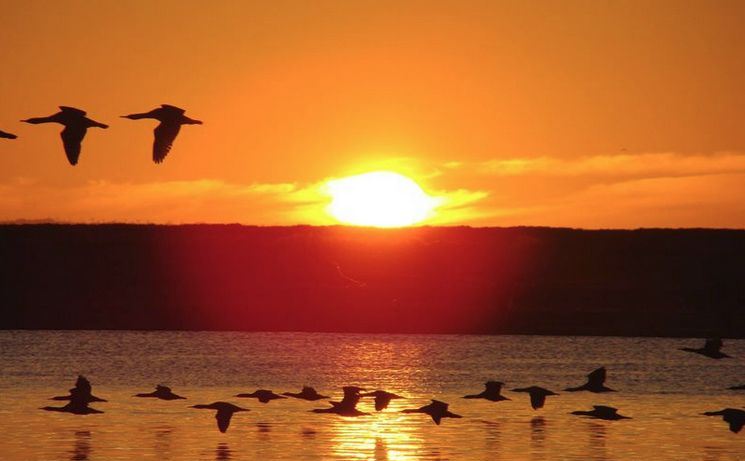
Sunset over the Berg River ยฉCliff Davies 2019

Excerpt from โ€˜Song of the Sea Goddessโ€™

Sam casts off from the jetty in his little fishing boat, Porcupine. The last orange and gold sunset slivers are disappearing behind the blue-grey hills on the far horizon as he pushes the throttle forward and eases little Porcupine out into the broad brackish river that leads to the ocean.

Gulls wheel noisily overhead, their keening cries eerie in the twilight. The twin lighthouses blink at each other on either side of the bay. Sam pushes the throttle forward another notch against the growing sea swell. He runs his work-roughened hands around the little boatโ€™s steering wheel and sets his course along the coast, inhaling the sharp sea air.

Sam grew up on the Cape Flats. Life had been hard there; it still is. But heโ€™s escaped. He had to. On the run from members of an opposing gang, he got on the road and hitched up the West Coast. He slept rough; got work, casual stuff; then things started to look up. He found a broken-down little boat one day when he was exploring the shoreline for salvage. Slowly he fixed it up with the help of a retired shipโ€™s engineer called Jannie, who spends his days giving advice and watching the activity in the little harbour by the river mouth.

Sam and Porcupine make a great team. Heโ€™s brought the little boat back to life and in return she gives him safe shelter and a means to make a living from the bounty of the ocean. Tonight heโ€™s fishing for octopus, which is best done at night with a lamp and a little can of vegetable oil to make a window in the waves. He rounds the coast to his favourite cove and drops anchor.

Night comes quickly, and within half an hour Sam has two good-sized octopuses in his fishing bucket. He shifts a little on the makeshift perch of his old sleeping blanket, propping his back against the wheelhouse. Sam has been busy helping out in the harbour all day. He feels the stiffness of a hard dayโ€™s work; heโ€™s tired. Lulled by the bobbing boat, Sam slips away into a glorious slumber.

He is awakened by the sound of voices. Someoneโ€™s on the boat!

โ€˜Concentrate,โ€™ says the first.

โ€˜I am concentrating,โ€™ says the second, rather indignantly.

Sam holds up the lamp. โ€˜Whoโ€™s there?โ€™ He stands up and turns around sharply. Thereโ€™s no one. He walks around the little deck, holding up the lamp and peering out into the inky ocean. Then he hears them again.

โ€˜Over he-re,โ€™ the voice calls in a sing-song voice.

โ€˜Over he-re,โ€™ joins in the second voice in a deeper tone.

Sam spins around. Where are the voices coming from?

โ€˜Coo-e,โ€ calls the first voice.

Suddenly a jet of water spurts out of the fishing bucket, wetting Samโ€™s feet. A tentacle waves at him. โ€˜Coo-e.โ€™ It waves again.

Sam crouches down by the bucket. The two octopus heads bob up, their eyes fasten upon his. โ€˜What the…?โ€™ Each of them winks at him. โ€˜No!โ€ Sam stands up and takes a step backwards. More tentacles appear, waving at him. Sam shakes his head.

โ€˜Let us go!โ€™

โ€˜Please, mister fisherman!โ€™

Sam approaches the bucket again. He squats down. โ€˜No man. Fish donโ€™t talk.โ€™

โ€˜Weโ€™re not fish,โ€™ says the first voice indignantly.

โ€˜Weโ€™re cephalopods.โ€™

Sam rubs his eyes; he pinches himself.

โ€˜Youโ€™re not dreaming, you know.โ€™ A tentacle extends towards Samโ€™s arm and prods him gently. โ€˜This is real.โ€™

โ€˜Tip us out and let us go,โ€™ sings the first voice.

โ€˜And lots of treasure you will know,โ€™ choruses the second.

Itโ€™s as if someone has taken over control of his body. Sam picks up the bucket and steps over to the side of the boat where he gently inverts it. As the two octopuses slide into the sea, a huge wave breaks over the boat, knocking Sam flat on the deck. The empty bucket lands next to him with a clatter. Porcupine bobs about like a cork, and suddenly dozens of octopuses appear above the waves. As Sam tries to find his feet, a vast tentacle reaches onto the deck and grabs the bucket, swiping Sam across the head and knocking him out cold.

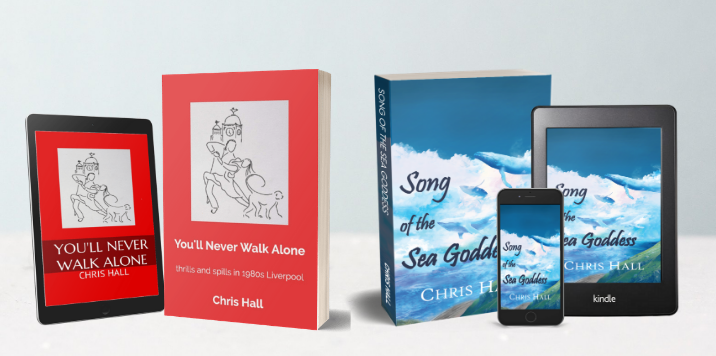
Pre-order your copy of the
e-book now for the introductory price of $3.99 or your country equivalent:
USA ~ UK ~ IND ~ AUS ~ CAN ~ ESP ~ Rest of the World

My characters are tugging at my sleeve… again

โ€˜Another new book? I say, Ms Hall, that is admirable.โ€™ Connor raises his whisky glass in my direction and takes a long pull. โ€˜And youโ€™re already onto the follow up novel. Youโ€™re becoming almost as prolific as The Poet!โ€™ He strikes a dramatic pose from his position by the fireplace.

I smile politely as my eyes travel around Cynthiaโ€™s sitting room. Cynthia is lounging languidly on the battered silk chaise-longue. Her eyes are shining over the large glass of red wine sheโ€™s sipping. โ€˜Song of the Sea Goddess; it’s a lovely title,โ€™ she smiles at me encouragingly. ‘Do you have a copy for us?’

I’m still waiting for them to ship from the printers. ‘Next time,’ I promise.

Gina is sitting in the armchair opposite her. Her left hand rests on her knee and the light is catching the diamond in her ring. She sees me looking at it.

โ€˜We decided to put the wedding off for a bit.โ€™

โ€˜I hope you werenโ€™t waiting for me toโ€ฆโ€™ I stop in mid-sentence, feeling awkward.

Gina laughs. โ€˜Only Ma and Auntie Marie are bothered. You know what theyโ€™re like!โ€™ She shakes her head. โ€˜No, Iโ€™m concentrating on my career.โ€™

โ€˜Good for you,โ€™ I say, raising my glass and taking a sip. The pleasant taste of the cheap Bulgarian Cabernet Sauvignon takes me straight back to the early 1980s. A sudden thought occurs to me. โ€˜Whereโ€™s Gary?โ€™

โ€˜Oh, he and Bob have gone to the match, nursing their New Year hangovers.โ€™ She grins. โ€˜Fingers has become quite a celebratory at Anfield.โ€™

โ€˜I can imagine,โ€™ I say, smiling back.

Ginaโ€™s expression darkens. โ€˜Your new bookโ€™s set in South Africa, isnโ€™t it? She raises a disapproving eyebrow. โ€˜You do know weโ€™re boycotting everything South African*.โ€™

Connor clears his throat but says nothing and Cynthia shifts awkwardly on the chaise-longue.

โ€˜Yes, I know. I did the same.โ€™ I reply, remembering short supermarket dilemmas. โ€˜But things have changed. The country celebrated 25 years of democracy last year. Apartheid is over. Nelson Mandela became the first president.โ€™

โ€˜Well I never.โ€™ Connor stares thoughtfully into his glass. โ€˜But I suppose weโ€™re part of history now.โ€™

โ€˜Iโ€™m afraid so.โ€™ Strange as it still seems, the 1980s are history. It feels to me like only yesterday.

โ€˜Oh, but Ms Hall, you bring us to life.โ€™ Cynthia casts a theatrical gesture in my direction.

โ€˜Which is whatโ€™s happening to us now,โ€™ says Gina determinedly. She shifts in her seat and pulls a crumpled postcard out of the back pocket of her jeans. โ€˜This came from Lucy last week. She and Pierre are working on a cruise ship now. Heโ€™s a DJ and sheโ€™s a croupier in the casino.โ€™

That makes perfect sense.

Connor interrupts my thoughts. โ€˜As a fellow writer, I understand you have to go where the muse takes you, as it were.โ€™ He strides over to the sideboard to top up his glass. โ€˜But I thought there might be at least one more historical fiction book in you.โ€™

โ€˜Our sequel?โ€™ Gina waves the postcard at me.

I glance down and see my notebook has fallen open on my lap. I look up at their expectant faces. I guess thereโ€™s no harm in jotting down a few more notesโ€ฆ

*For a long time, Nelson Mandela and the issue of South Africa under the Nationalist apartheid regime weren’t widely discussed in the UK. When this song hit the UK charts in 1984 more people started asking questions, which contributed to the issue rising to national prominence. The rest, as they say, is history.

Side Note: I vividly remember my flat-mate, who makes a tiny cameo appearance in ‘You’ll Never Walk Alone, dancing round our kitchen singing this!


Many of you will know that the characters from You’ll Never Walk Alone are frequently tugging at my sleeve. One day, I will give them their wish and write their longed for sequel. They’ve certainly come up with a few good ideas to start to shape the plot. Meanwhile, my new novel, Song of the Sea Goddess, is coming very soon.

And finally, a Happy New Year
to one and all.
Keep safe, keep sane, and let’s hope for a better 2021!

Location, Location, Location #9

Speke Hall, Liverpool

Todayโ€™s stop on our literary tour through my novels takes us to a specific location in South Liverpool. Grade 1 listed Speke Hall has a fascinating history, and a whole novel could have been constructed around a number of events associated with the house and its inhabitants. However, it purely serves as a backdrop to my story.

My familiarity with the building is connected to the tea-rooms there, and not just for the coffee and cake, although as any writer knows, that would be reason enough. It was, among a number of venues, where I used to meet with members of my team to conduct their appraisals. We were all home-based workers, probably some of the first back in the early noughties, and following a remark from one of my neighbours about the number of โ€˜gentleman callersโ€™ Iโ€™d had to my house, I realised that having home-based meetings was probably not such a good idea. Hence I came to know the nearby tea-rooms at Speke Hall rather well. Not all the meetings were easy, but the lovely setting made the whole business a little less stressful, and allowed my reputation to recover.

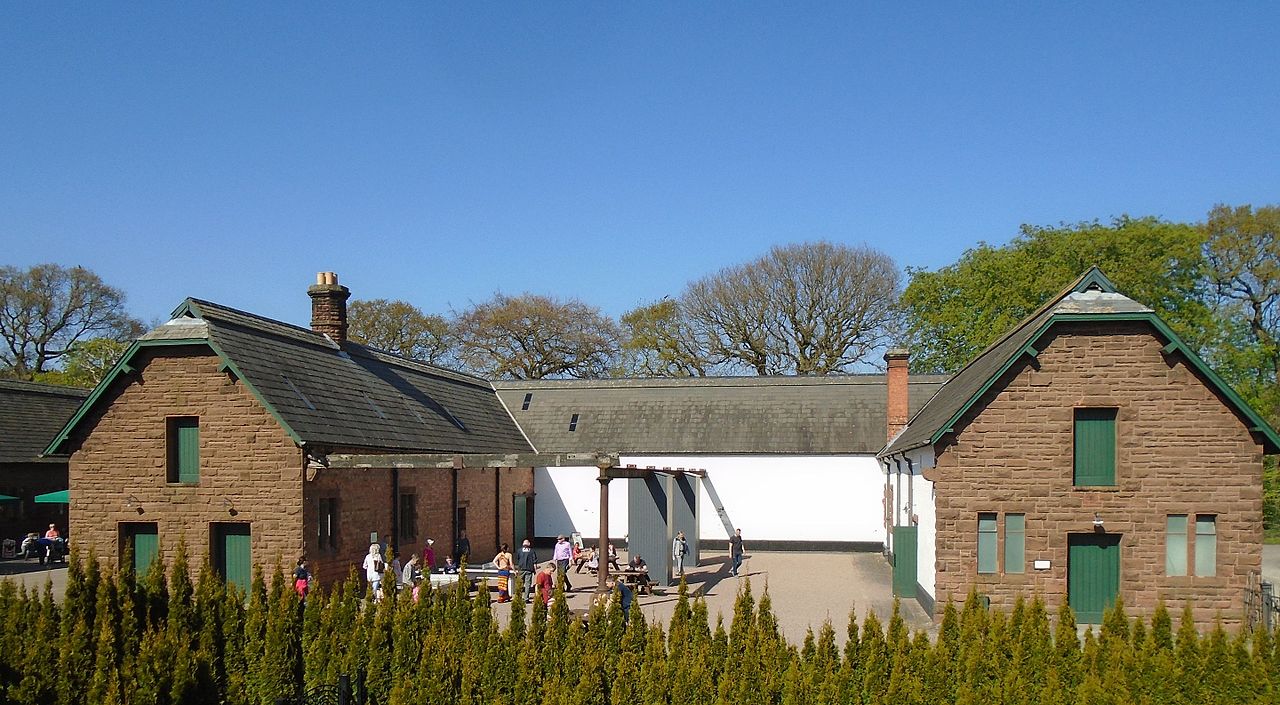
Speke Hall – tea-rooms and visitors’ centre

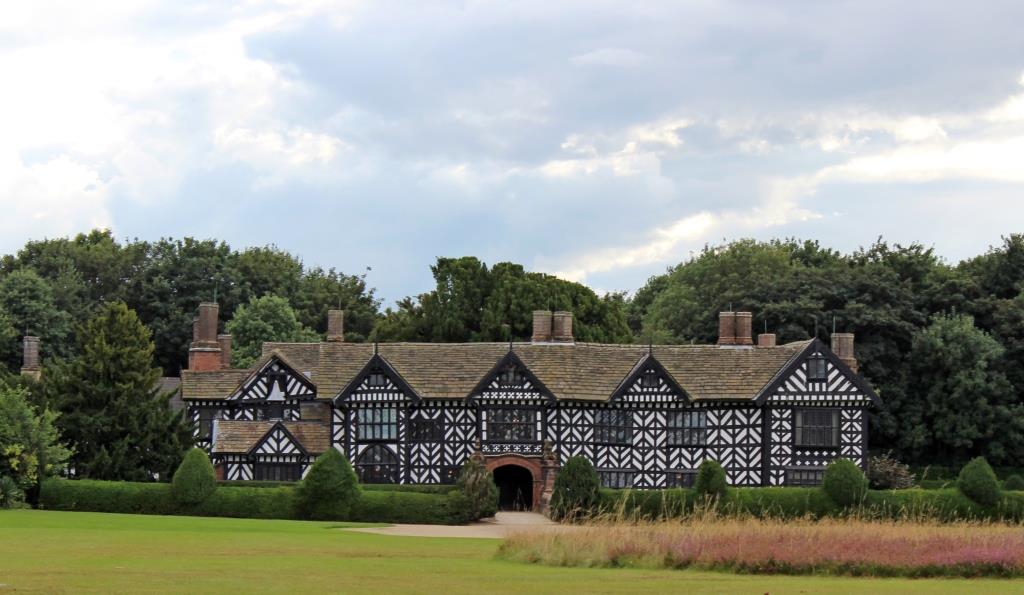
Speke Hall is a beautiful old manor house, with parts dating back to Tudor times, and itโ€™s just the kind of place that wicked Lord Childecott, the antagonist in Following the Green Rabbit, might have lived, although I had to whisk it away to the next county for the purposes of my story. In addition, the estate’s former farm buildings, which were converted into the tea-rooms, could quite easily have served as one of the outbuildings in which Mr Eyre was imprisoned by the evil Lord, if you picture them without windows and with a thatched roof, as they probably would have been in the past.

I was deliberately vague about the time-period in which the novel was set in order to avoid becoming embroiled in too much historical research, but weโ€™re somewhere in the late sixteenth century. Like William Norris, a Royalist, who lived in Speke Hall at the time, Lord Childecott would be suspicious of both the French and the Jacobites. Of course, my antagonist is suspicious of any stranger, but to tell you more would give the game away if you havenโ€™t read the novel.

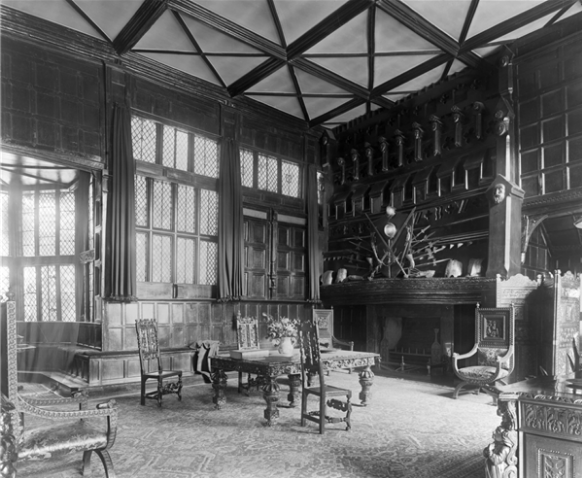
I had in mind the Great Hall with its grand fireplace and oak paneling, as the setting for the scene below.

Speke Hall, The Great Hall

Excerpt from ‘Following the Green Rabbit

Up at the Manor House, Lord Childecott was getting nowhere with his new prisoner. Despite his best efforts, Mr Eyre was failing to co-operate. True, he hadnโ€™t resorted to violence yet, and that was always a possibility. His chief enforcer, Smiler, so named because of his lack of teeth, was a dab hand with the thumb screws and other less than dainty tools. However, he had a feeling that such methods would only work if Eyre was to watch them being applied to someone he cared about. If local gossip was true, then he knew just who that would be.

Lord Childecott paced the room while Mr Eyre sat patiently on the chair to which he had been bound. Since his capture that afternoon, heโ€™d been locked up in a dusty outbuilding. He had tried to find a way out, but although heโ€™d succeeded in freeing himself from the ropes which tied his hands and feet, escape from the building had proved impossible. Now it was evening. He was hungry and thirsty and he was facing his captor and his questions.

โ€œIโ€™ll ask you again, Eyre, where are you from?โ€

โ€œAnd Iโ€™ll tell you again. I came from the other side of the wood.โ€

โ€œYou were on my land and thatโ€™s forbidden.โ€ Lord Childecott glared at him. What do you want here?โ€ He strode over and fingered Mr Eyreโ€™s jacket. โ€œAnd why are you so strangely dressed?โ€

Had his hands not been bound to the chair, Mr Eyre would have raised them in a gesture of exasperation. โ€œIf I told you where Iโ€™m from, you wouldnโ€™t believe me.โ€

โ€œTry me,โ€ Lord Childecott snarled, an inch from Mr Eyreโ€™s face. Mr Eyre tried to avoid grimacing at the stench of Lord Childecottโ€™s rotten-toothed breath.

โ€œI believe Iโ€™ve come from the future. More than two hundred years in the future, judging by what youโ€™re wearing and the style of the buildings here,โ€ Mr Eyre replied glancing around the room.

โ€œDonโ€™t trifle with me, Eyre.โ€

โ€œIโ€™m not. Look, you say Iโ€™m strangely dressed. This is how gentlemen are accustomed to dress in the first decade of the twentieth century. Look in my pocketโ€ he indicated his jacket pocket. Childecott didnโ€™t move. โ€œWell, go on, look.โ€

Childecott reached into Mr Eyreโ€™s pocket and brought out the Box Brownie.

โ€œThatโ€™s called a camera. Itโ€™s a new invention. Something from the future,โ€ said Mr Eyre. โ€œIt takes pictures, likenesses if you will.โ€ Mr Eyre thought for a moment. โ€œLike an automated artist.โ€

Childecott turned the camera over in his hands. He put it to his ear and shook it. โ€œIn this little box?โ€

โ€œDo be careful with that,โ€ Mr Eyre pleaded.

Childecott tossed the camera onto a nearby couch where it rolled over and came to rest on its side. โ€œI donโ€™t believe you. Some foreign toy, no doubt,โ€ he sneered. โ€œNow, who are you working for? The Jacobites? The French?โ€

โ€œIโ€™ve told you. Iโ€™m not working for anyone and Iโ€™m not a spy. Iโ€™ve told you what I believe has happened.โ€

โ€œEnough! You are trying my patience.โ€ Lord Childecott thought for a moment, then turned to one of his men who was standing by the door. โ€œLock him up again and fetch Martha Stebbins, Iโ€™m sure we can give you an incentive to talk once you see what Smiler here can do to your friend Mistress Stebbins.โ€

Two of Lord Childecottโ€™s enforcers untied Mr Eyre, then taking him firmly by the arms, frog-marched him from the room.

โ€œNo! No!โ€ He struggled against them wildly. โ€œYou leave Martha out of this. Iโ€ฆโ€ At Lord Childecottโ€™s signal one of the guards stuffed a grubby piece of material in to Mr Eyreโ€™s mouth and he could speak no more.

As the two enforcers dragged the struggling Mr Eyre across the courtyard and back to the barn, he noticed a flash of movement behind the Manor House. The guards, however, were too preoccupied with trying to manoeuvre their resisting captive to notice the two boys watching from the other side of the yard. Mr Eyre was manhandled through the barn door, all the time protesting through his gag. One of the men yanked it out of his mouth.

โ€œGo on, you can yell all you like out here. No one will hear you.โ€ He laughed and heaved the door closed, dropping the heavy wooden plank into place and barring the door shut.

Mr Eyre got to his feet and started to hammer on the door with his bound hands, bellowing at the top of his voice to be released.

โ€œRight then, weโ€™d better go and fetch old Martha,โ€ the guard said to his companion as they stomped off, leaving Mr Eyre cursing and yelling and banging on the barn door.


Following the Green Rabbit
is available in paperback and ebook from Amazon at a discounted price
for the month of December.

USAย ~ย UKย ~ย CANย ~ย AUSย ~ย IND
the rest of the world


Image credits: Rodhullandemu, wikiwand, countrylife.co.uk

Shifting Perspectives: Orion is Upside Down!

What do you see when you look up at the stars?

A chance remark I made the other day in response to Frank Premโ€™s illustrated poem, Southern Stars for Christmas, raised a question or two about what we see in our night sky, depending upon where we are in the world. If you follow the link youโ€™ll see the thread, and as a special bonus, youโ€™ll get to read Frankโ€™s poem and see his southern star pics.

We can all see some of the same stars

If you live in the northern hemisphere, you can see all of the constellations in the northern part of the sky and some of what is visible from the southern hemisphere. As you travel downward towards the equator, you’ll be able to see more of the sky from the southern hemisphere’s perspective, while also losing more of what you’d normally see in the northern hemisphere. And vice versa, of course.

There are some stars that you can only see from one hemisphere, which is why if youโ€™re in the North, youโ€™re so familiar with the Polaris (the North Star) and conversely, if youโ€™re in the South, you know the Southern Cross.

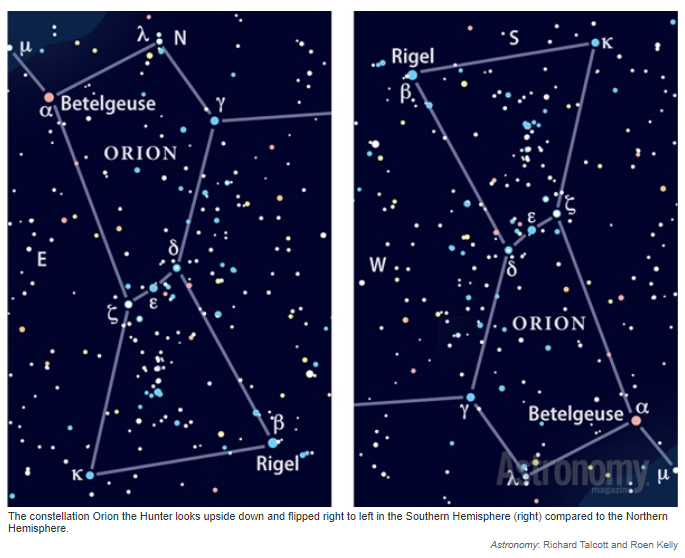
But some constellations, like Orion, look different!

Coming originally from the northern hemisphere, Iโ€™d say Orion is upside down here in the South, but maybe itโ€™s the other way around. I guess it depends on what youโ€™re used to. Either way, you can still make a huntsman out of the two-dimensional pattern of distant stars, which form the constellation.

A new night sky can be a little disorienting

I remember, not long after first moving to South Africa, getting up in the middle of the night and looking up at this strange, unfamiliar sky. It was a clear night and here was very little light pollution compared to what I was used to back in the well-lit city of Liverpool. The huge velvet sky, pin-pricked  with the brightest, densest stars I’d ever seen, was magical. And in that part-way point of being half asleep and properly awake, when all around me was silence, I thought for a moment that Iโ€™d been transported to a completely different planet.

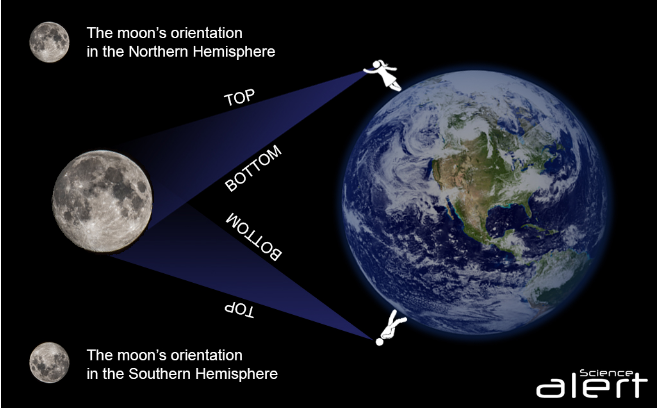
We’re all looking at the same moon…

…but we might not be seeing the same part of her.
Click here for the ‘sciency’ bit.

In the northern hemisphere you have the famous Man in the Moon. But for me, here in the South, one of the loveliest sights is of the African moon lying on her back. I think of Karen Blixen’s words every time I see our beautiful moon reclining languidly in our night-time sky.

The African moon has influenced my writing. Just last week, when I wrote Home for the Holidays in response to Sadje‘s What Do You See? prompt, our lovely moon popped up in the second verse. She also puts in an appearance in Trance, one of the lyrical pieces from my San Man series written earlier this year. Moving hemispheres, countries and cultures has had an increasing impact on my writing journey and now, ten years on, the British author has become a South African one, and my soon-to-be-released novel, rather then being set in England, is set in my adopted country.

Frank suggested I post some pictures of my African sky at night. Unfortunately there’s been a lot of high cloud about in the past week, but if I eventually get some good ones, I’ll post them to my Instagram feed on the sidebar.

What do you see when you look up at the stars?

Location, Location, Location #8

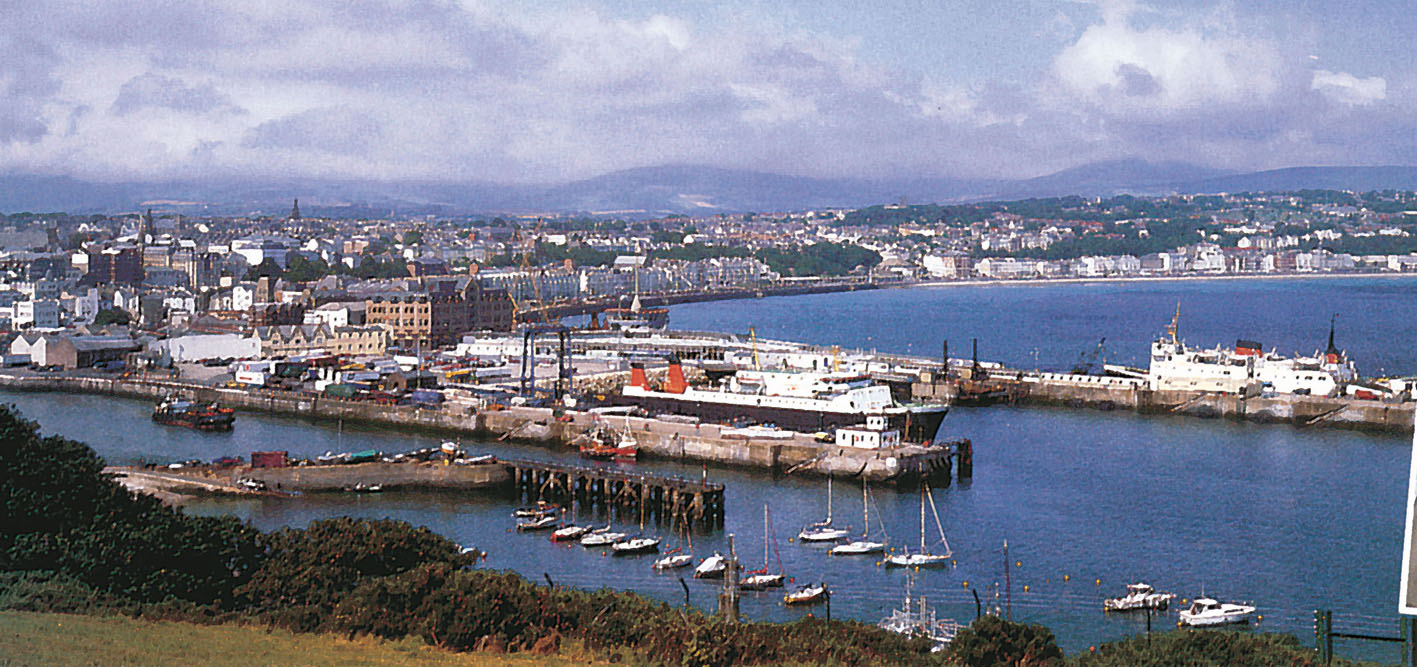
Location No.8 – The Isle of Man

Next on our literary journey through the pages of my novels, we’re going to hop over to the Isle of Man, a small island in the Irish Sea, which lies between northern Great Britain and the north of Ireland, where we’re going to catch up with Pierre, our handsome leading man from You’ll Never Walk Alone, who’s treating Lucy to a little break away (although, if you’ve read the book, you’ll know he has another agenda).

I have fond memories of the Isle of Man, even though I only ever visited as part of my job as an insurance surveyor. I used to go there for three or four days at a time a couple times a year, but unlike Pierre and Lucy, who travel on the Isle of Man ferry, I used to fly over from Liverpool on a little Shorts 360 airplane.


Although I was working, I still managed to see quite a lot of the place between appointments. The island is probably best known for the notoriously hazardous annual TT motor cycle race. On one occasion I drove my hire car around the famous circuit, although at a considerably more modest pace than the TT competitors, of course. During the initial draft of the book, I’d been planning for Pierre to take part in the race, but the logistics became problematic. Maybe he’ll return to the island to do just that in a sequel to You’ll Never Walk Alone that my characters are still begging me to write.

I was also tempted to take Lucy and Pierre on a grand tour of the island, but it would have got in the way of the story, so I contented myself with a brief interlude in which they drive out to Peel Castle on the west coast of the island. Itโ€™s a partially restored Viking ruin, and a pretty, peaceful location where once I sat overlooking harbour to dictate a report. My typist (yes, it was that long ago) told me she wondered why she could hear seagulls in the background.


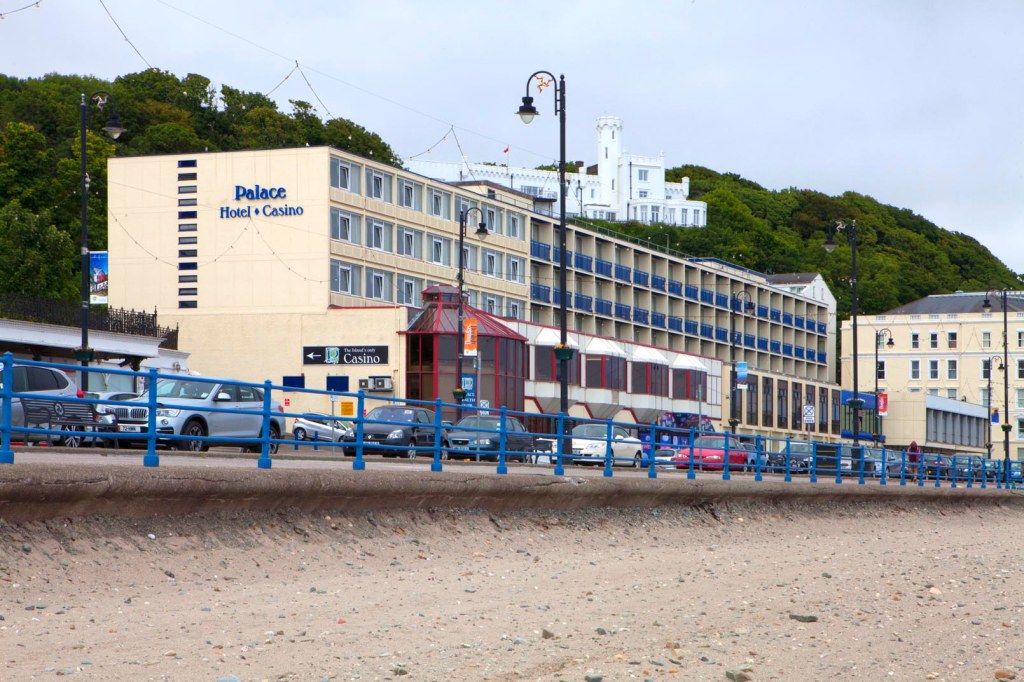
Lucy and Pierre stay in the fictional Royal Hotel, where Pierre โ€˜has a bit of businessโ€™ to attend to. It’s loosely based on the Palace Hotel and Casino, one of the places I stayed in during my visits to the island. It made a fine and fitting backdrop to the story, although I never went to the casino itself where much of the action in this part of the book is set. Nor did I visit the โ€˜back of houseโ€™ areas in that particular hotel. Trust me, itโ€™s not always a good idea to stay, much less eat, in a place where youโ€™ve inspected the kitchens. However, my knowledge of hotel security did come into play.

Excerpt from ‘You’ll Never Walk Alone’

Pierre crept along the second floor corridor. Heโ€™d left Lucy sleeping. As far as she was concerned, they were just going to help Verushka get away from the abusive Russian. Pierre hadnโ€™t mentioned the jewels again. He decided he was going to make sure he got his hands on them himself, and since he still had the passkey and d-lock, what could go wrong? Provided he was careful.

He counted off the room numbers until he reached 287. Even from outside the door he could hear the Russian snoring. Pierre took out the passkey and ran it through the slot next to the door handle. The indicator light changed from red to green and the lock clicked open. Pierre paused and listened again; satisfied, he opened the door gently and slipped into the room. He closed the door quietly. The room was shrouded in darkness. The Russian snored on. Pierre could also hear Verushkaโ€™s slow, quiet breathing; she was also asleep.

Pierre moved silently over to the wardrobe and took out the pen torch heโ€™d borrowed from behind the bar downstairs. As he opened the door, the Russian spluttered and muttered something. Pierre froze and killed the torch beam. He heard Denisovich turn over. Minutes passed. He heard the Russian breathing heavily again.

All clear, Pierre thought. He switched the torch back on and fitted the electronic device into the lock of the safe. The little door swung open. Pierre reached in and drew out a thick, velvet covered jewel case. He eased back the little golden clasp and opened it. There was the necklace, with the matching earrings and a brooch; the complete set.

As Pierre stood up he felt the cold, hard barrel of a gun press against the back of his head. ‘Turn around slowly and give that to me,’ said Verushka softly.


You’ll Never Walk Alone
is available in paperback and ebook from Amazon at a discounted price
for the month of December.

USA UK ~ CAN ~ AUS IND
the rest of the world


Image credits:
Isle of Man Tourism Board, Isle of Man Newspapers (David Kneale); jetphotos.com (Fraser McLachlan); Trip Advisor; Best Western Hotels

Location, Location, Location #7

Location No.7 – Cimetiรจre du Pรจre Lachaise, Paris (Wikipedia)

Returning to our literary tour through the pages of my novels, letโ€™s pop over to the romantic city of Paris, where weโ€™re going to join our main character, Laura and her boyfriend, Greg from The Silver Locket. The city of Paris is rather special to me, being the first overseas place to which I travelled with my husband, when we were very young, back in 1985. In a similar way, Paris is special to Laura, being the first place Greg took her for a weekend away.

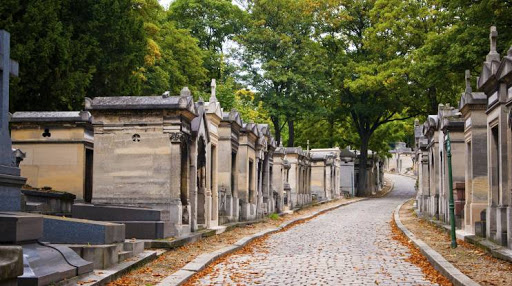
Specifically today we’re going to tag along with them on their visit to Pรจre Lachaise, the largest cemetery in Paris and the most visited necropolis in the world. You may remember from the first stop on our tour that I share Lauraโ€™s fascination for old graveyards. You canโ€™t get much more fascinating than Pรจre Lachaise with its catalogue of famous decedents including Oscar Wilde, Edith Piaf, Jim Morrison, Gertrude Stein and many, many more, so naturally Laura would choose to visit the place during her weekend away with Greg.

Poet George Rodenbach, climbing out of his grave (Wikipedia)

Itโ€™s a fascinating place where you can wander for hours amongst some of the most incredible funerary monuments. Iโ€™ve been drawn to the cemetery during several subsequent visits to Paris, which was an easy hop from Liverpool on Easyjet by the late 1990s.

The narrow lanes and twisting paths are the perfect place for another eerie encounter with the mysterious woman in the brown coat, whom Laura first meets in the Rufford graveyard, although on this occasion, Lauraโ€™s mistaken and itโ€™s someone else. Gregโ€™s reaction to her erroneous confrontation and, a little later on, to the silver locket with its naively-drawn picture and odd little talisman inside, show us how dismissive he can be of Laura. We start to see that heโ€™s on different trajectory to her, scorning simple pleasures, like picnics by the river, which Laura continues to enjoy (as do I, provided there’s a nice bench to sit on).

Narrow lanes among the graves, perfect for an eerie encounter! (Fodor)

I have to say that Iโ€™m in rather good company with this particular choice of setting. Alexandre Dumas references the famous cemetery in his novel The Count of Monte Cristo as being โ€˜alone worthy of receiving the mortal remains of a Parisian family…โ€™ and the protagonist of Victor Hugoโ€™s Les Misรฉrables is buried in Pรจre Lachaise. More recently, in the film Fantastic Beasts: The Crimes of Grindelwald, the eponymous dark wizard convenes his followers at Pรจre-Lachaise towards the end of the film.

Excerpt from ‘The Silver Locket’

Laura and Greg stood together poring over the plan of the famous Parisian cemetery, Pรจre Lachaise.

โ€œOkay,โ€ said Greg, โ€œweโ€™ve seen Oscar Wilde, Jim Morrison, Edith Piaf, the Belgian poet whoโ€™s climbing out of his grave…โ€

โ€œGeorges Rodenbach.โ€

โ€œYeah, Rodenbach, who else do you want to visit?โ€ Greg looked around at the lines of gravestones and monuments stretching off in all directions. โ€œWe donโ€™t want to spend all day here do we?โ€

โ€œNo, but canโ€™t we just wander around for a bit? Oh, but we should see the wall where the communards were executed, that should appeal to you,โ€ Laura laughed. โ€œRound up the anarchists and shoot them.โ€

โ€œMmm, very amusing,โ€ said Greg consulting the plan. โ€œThe Mur des Fรฉdรฉrรฉs, as itโ€™s actually called, is along here,โ€ he said pointing to the map. โ€œWe can go there and then loop back along here towards where we came in.โ€

They wandered along in silence, Laura veering off the path to take a closer look at some of the more intriguing or quirky-looking tombs. A large ginger cat was happily curled up on the step of Rossiniโ€™s tomb. Laura stopped to stroke it. It purred loudly.

She looked up; Greg was already some distance away further down the path. Then out of the corner of her eye she saw a movement. At first she thought it was another cat, the cemetery was full of them, but then she saw a figure emerge from inside one of the tombs. It was a large woman wearing a brown coat. It was her, Laura was sure. And this time sheโ€™d followed her all the way to Paris. Laura moved stealthily towards the woman. She wasnโ€™t going to get away from her a third time. Laura crept as quickly as she could after the woman, keeping out of sight. The woman was on one of the main pathways now, heading towards the gate. Laura broke into a trot. She was almost on her when she heard rapid footsteps catching up behind her. She ignored them as she drew level with the woman and caught her by the arm.

โ€œGot you,โ€ Laura cried triumphantly. โ€œNow you can tell me who you are and…โ€ Lauraโ€™s voice trailed off.  It wasnโ€™t her. โ€œOh, sorry. Pardon, madame,โ€ she said, letting go of the womanโ€™s arm. She continued her apology, explaining in her fluent French that sheโ€™d mistaken her for someone else. Laura stepped back and bowed her head. โ€œPardonnez-moi.โ€

โ€œWhat on earth do you think youโ€™re doing, Law?โ€ It had been Greg behind her.

โ€œIt was a mistake,โ€ Laura said to Greg, then turning to the woman: โ€œUne erreur, Madame.โ€

The woman brushed her arm in an exaggerated fashion, snorted, and headed off towards the gate.

โ€œDo you think I should go after her?โ€ asked Laura.

โ€œNo, I donโ€™t. Just leave it. But what in heavenโ€™s name were you doing? You virtually assaulted that poor woman.โ€

โ€œI know, I feel awful. But this woman in a brown coat keeps following me. First I met her in the churchyard in Rufford. But then she was in Preston, and then I saw her by the park in Liverpool and then at the train station there too.โ€

Greg rolled his eyes.  โ€œCome on, letโ€™s get out of here,โ€ said Greg.  โ€œThere was a cafรฉ near we came in, letโ€™s go and have a drink and maybe you can explain what this is all about.โ€

Laura did her best to explain, but under Gregโ€™s critical gaze, it did seem that her bumping into the mystery woman a couple of times was probably no more than coincidence. Laura took out the locket and handed it to him, telling him where she had found it and showing him how it opened.

โ€œWhatโ€™s this scruffy bit of paper?โ€ he said, pulling out the little drawing. Laura was only just quick enough to stop it blowing off the table where Greg had dropped it in disgust. โ€œAnd this stamp inside, it doesnโ€™t look like a proper jewellerโ€™s mark to me. Is it worth anything? At least youโ€™ve not been tempted to wear such a naff little object.โ€

Laura snatched it back from him and carefully replaced Thomasโ€™s drawing over the little talisman which still looked up at her imploringly. There was clearly no point in explaining anything further about it. As for the dreams, she decided she should keep those to herself. It was all very well trying to find out about the history of the house sheโ€™d inherited, but to try to get Greg to understand that sheโ€™d been trying to trace the existence of someone she had just dreamt about, however strangely and vividly, was really not a good idea.

The sun was high in the sky; it was past noon and people were leaving their offices for their customary long lunch breaks.

โ€œCome on,โ€ said Laura. โ€œLetโ€™s get a picnic from the boulangerie over the road there and take it down by the river.โ€

โ€œWouldnโ€™t you prefer to go to a nice bistro somewhere?โ€

โ€œNot if weโ€™re eating tonight. Oh please, Greg, letโ€™s have a picnic. Itโ€™s what we always used to do.โ€

โ€œThatโ€™s because it was all we could afford. But okay, if you like. Iโ€™ll leave the choice up to you, as long as you promise not to attack any more old ladies.โ€


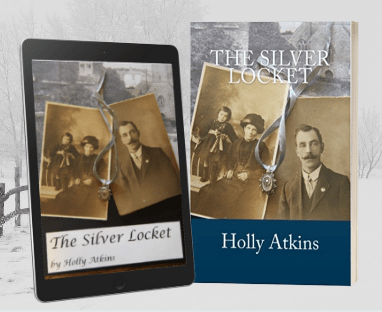
The Silver Locket
(written under my pen name Holly Atkins) is available in paperback and ebook from Amazon at a discounted price for the month of December.

USA ~ UK ~ CAN ~ AUS ~ IND
the rest of the world

Location, Location, Location #6

Todayโ€™s stop on our literary journey through my novels takes us to a specific part of Liverpool. From the pages of Youโ€™ll Never Walk Alone, we visit one of best-known and best-loved traditional hostelries in the city, The Philharmonic Dining Rooms, commonly known as โ€˜The Philโ€™.

Built at the beginning of the 20th century, the building is an architectural gem. The interior is ornately decorated using musical themes that relate to the concert hall across the road. Two of the smaller side rooms are appropriately named, โ€˜Brahmsโ€™ and โ€˜Lisztโ€™ and, although I donโ€™t mention them by name, it is in one of these rooms that Ruth and Connor settle themselves in the excerpt below. Also of note in this splendid location are the gentlemenโ€™s urinals, which are made from rose-coloured marble (ladies are allowed to take a peek when itโ€™s not busy, and yes, of course Iโ€™ve been for a look).

This grand public house is popular with folk from all walks of life, but especially โ€˜artyโ€™ types like writers and musicians, and students. Close to the campus of the University of Liverpool, where I studied back in the early 1980s when the novel is set, it was always a popular stop on the way into town of an evening. Connor would be in his element here, and indeed in any bar!

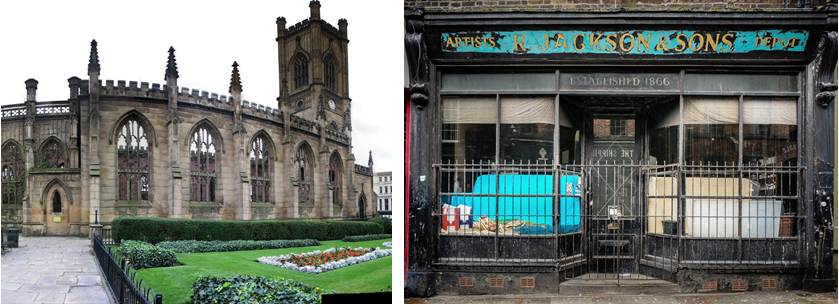
Connor and Ruth arrive at โ€˜The Philโ€™ by way of St. Lukeโ€™s Gardens, where they first meet up. Better known as the โ€˜Bombed Out Churchโ€™, St. Lukeโ€™s another well-known Liverpool landmark, popular for assignations of various kinds. The church was badly bombed during the WWII and only the shell remains, but the gardens, even then, were nicely kept and were open to the public during the day.

One final note: there is an art supplies shop in Slater Street, called Jacksonโ€™s. One of those โ€˜properโ€™ old shops, which has been there since the late 1890s. Past customers include famous Liverpool artists, Augustus John and Stuart Sutcliffe. I had a friend who worked there. I suppose that Ruth might have been very, very loosely based on her. Donโ€™t let the unprepossessing photo put you off. Itโ€™s changed a bit since the photo below was taken, although this is more how I remember it.

Excerpt from Youโ€™ll Never Walk Alone

Ruth checked that the back door was locked and bolted, snatched up her keys and handbag, and picked up a package from the counter. She fastened her coat and pulled the hood over her short blonde hair before stepping out into the early evening drizzle. She quickly double-locked the front door and padlocked the wrought iron gates over the shop front of Windsorโ€™s Art Supplies, the family shop which her great, great-grandfather had opened in 1879.

She glanced up and down Slater Street, then crossed the road into the narrow street opposite. The heels of her shoes struck the pavement determinedly. A few minutes later she was hurrying across the busy road towards the gardens of the bombed-out church of St Lukeโ€™s. The cathedral clock further up the hill was just striking five oโ€™clock as Ruth entered the church gardens. Her eyes followed the pathway as she searched for the man she was meeting. The gardens were all but deserted, the wooden benches set at intervals around the pathway empty apart from one.

As Ruth approached the man stood up and raised his hat to her. โ€œGood evening to you,โ€ he said. โ€œThank you for coming.โ€ He smiled and held out his hand. โ€œThey call me โ€˜The Poetโ€™,โ€ he said, gazing intently into her eyes.

Ruth introduced herself and shook his hand firmly.

โ€œPlease join me on my solitary pew, Miss Windsor,โ€ he continued, indicating the damp bench with a sweeping gesture. Ruth detected an Irish accent. She noticed his striking blue-green eyes which lit up his craggy face. For an older man, she found him really rather attractive.

Ruth tucked her coat under her as she sat down. The rain had stopped, but water continued to drip from the trees and bushes.

She was puzzled though. โ€œThe Poet?  I was expecting someone else. The order was placed byโ€ฆโ€

โ€œMy associate, Pierre Bezukhov.โ€  Connor said triumphantly. โ€œYou do have the painting for me then?โ€

All along sheโ€™d thought it was strange that her client had wanted to meet her away from the shop, and now heโ€™d sent someone else to pick up the painting. Still, a commission was a commission. Shrugging her shoulders, Ruth handed him the package.

Taking it from her he fingered the packaging: โ€œShall we take a little look?โ€ It had started to rain again. Connor looked skyward. โ€œBut not here.  Letโ€™s get out of the weather.โ€ Turning to Ruth he said: โ€œMiss Windsor, would you care to accompany me to a nearby hostelry, to seal the deal with a little drink as it were..?โ€

Ruth hesitated. โ€œWellโ€ฆโ€

โ€œDear Miss Windsor, I would really like to have a look at it while youโ€™re with me.โ€ Connor looked at her intently.

Ruth stared back at him. โ€œAll right, fine.โ€

โ€œThe Phil?โ€

โ€œOkay, letโ€™s go before we get any wetter.โ€

They left the gardens and hurried up the road to The Philharmonic Dining Rooms, the grand Victorian pub known for its rich tiling, stained glass and chandeliers, and of course, its wide selection of alcoholic beverages.

There were only a handful of people standing around the bar area when they arrived. They selected an empty corner in one of the small side rooms and Connor went to fetch their drinks. Ruth took off her coat and smoothed down her skirt. She eyed the package which The Poet had left on the table between them.

Connor returned empty-handed. โ€œSo sorry Miss Windsor, I appear to have forgotten my wallet.โ€

Ruth fished in her handbag and retrieved a scrunched up five pound note from its depths. She held it out to him. โ€œPlease, do call me Ruth, especially if Iโ€™m buying.โ€

Connor took the note with a slight bow and hurried back to the bar. He returned with a pint of Guinness and a gin and tonic. He piled up the change on the table in front of her. She scooped up the notes and coins and dropped them into an inner recess of her bag.

Connor lifted his glass and took a generous mouthful. Putting the drink down, he picked up the painting, then having untied the wrapper carefully he peeked inside.

Ruth leant towards him over the table and whispered: โ€œThe Turner, as ordered.โ€ She took a sip of her drink.

Connor looked up, his eyebrows raised over those striking blue-green eyes. โ€œAn original?โ€

Ruth frowned. โ€œNo, of course not. You donโ€™t know?โ€ she paused. Something was wrong. โ€œThis is exactly as the client requested,โ€ she whispered across the table.

โ€œYes. Yes of course. Just picking it up for a friend donโ€™t you know?โ€ The Poet sounded doubtful. He re-tied the wrapper and took a large pull on his pint. Cradling the painting in his lap, he looked earnestly at Ruth: โ€œHe did pay for it, I trust?โ€

โ€œWell,โ€ said Ruth slowly, โ€œhe gave me a bank deposit slip for the payment. Otherwise I wouldnโ€™t have completed the commission for him.โ€

โ€œSure he did. Of course.โ€ Connor nodded thoughtfully. There was something fishy going on. A forgery? No, surely just a copy. Ruth didnโ€™t strike him as someone whoโ€™d be mixed up in something underhand. If he did take the painting from her, and she seemed quite prepared to let him have it, what was the worst that could happen?

โ€œListen, Miss Windsorโ€ฆ Ruthโ€ฆ hereโ€™s the receipt I got fromโ€ฆ er, Mr Bezukhov,โ€ Connor held out the crumpled piece of paper. Is there something you need me to sign?

Ruth rummaged in her bag and pulled out a well-used receipt book and a pen. She leaved through the pages. โ€œHere we are,โ€ she said, placing the book in front of him and pointing. โ€œJust sign here.โ€

Connor quickly scribbled an indecipherable squiggle and passed the book back to her. โ€œThank you Ruth, itโ€™s been a pleasure meeting you.โ€ He drained his glass and tucking the painting under his arm, stood up. โ€œMaybe our paths may cross again.โ€ He smiled, blue-green eyes twinkling, as he raised his hat to her.


You’ll Never Walk Alone is available in paperback and ebook

Image credits: Rodhullandemu, Bryan Ledgard, theguideliverpool.com and Vici MacDonald

Location, Location, Location #5

Location No. 5 – Daresbury, Cheshire

The latest stop on our literary journey through my novels takes us to Daresbury, one of the numerous villages located in the rolling Cheshire plain, which was the inspiration for the village near Bluebell House, home to Bryony, Bethany and their tutor, Mr Eyre in Following the Green Rabbit.

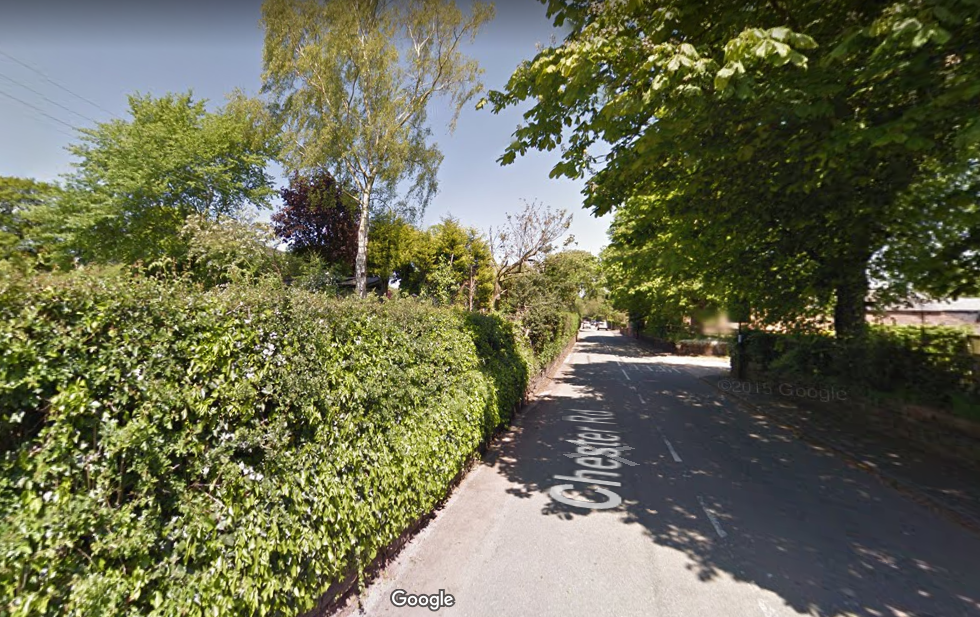
Daresbury is not so physically close to Alderley Edge as the fictional village in the novel, but the overall impression of this pretty little village, with its narrow lanes and Victorian cottages, was the perfect backdrop for the action that was to play out in the story.

I first stumbled on this quaint little village (Iโ€™m hoping it still is) during a narrow boat holiday back in the 1980s. Searching for lunchtime refreshment, we set out from the canal, and struck out towards the nearest village, which actually turned out to be quite a tidy step! Even now, I remember the hedgerows that lined the narrow lanes, where we picked blackberries for a not-very-successful dessert that evening. We passed the church, and a little further along, we found the all-important โ€˜Ringโ€™oโ€™Bellsโ€™ public house.

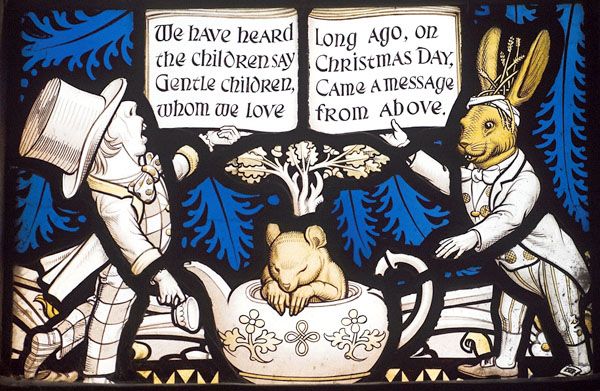
Not at all relevant to my story, but of interest, is the fact that Lewis Carroll (Charles Dodgson) was born at the vicarage in Daresbury. All Saintโ€™s church has some wonderful stained-glass windows depicting scenes from Aliceโ€™s Adventures in Wonderland.

Lewis Carroll inspired window in All Saint’s Church, Daresbury

There’s a print of this lovely depiction hanging in my bathroom. Was it from this connection that I unconsciously introduced a strange green rabbit into the story? We don’t actually visit the interior of the church in the book. If we had, it might have sent Mr Eyre down a whole new rabbit hole. But I digress.

The village green is a key location in Following the Green Rabbit, but as far as I recall, there isnโ€™t much of one in Daresbury, and I found myself remembering the one in the village in which I grew up, in Upper Poppleton, near York, way across the Pennines in Yorkshire. I have the impression that there were stocks on the corner of the Green at one time, but I think thatโ€™s just my imagination!

The Village Green in Upper Poppleton

Excerpt from โ€˜Following the Green Rabbitโ€™

The village was a pleasant fifteen minute walk from Bluebell Wood House. The narrow lane was lined with leafy hedgerows where insects buzzed. โ€œWe collected blackberries and elderberries for jam along here last year, Mr Eyre.โ€ Bryony pointed out a row of tall bramble bushes. โ€œLook Bethany, there are so many again, and theyโ€™ll be ripe soon.โ€

โ€œAnd did you eat as many as you picked?โ€ Mr Eyre said, laughing as he rummaged about in the bushes, examining the fruit. โ€œI know I did as a boy.โ€

โ€œDo they have blackberries in London?โ€ asked Bethany.

โ€œWell, not in the city itself, apart from in some of the parks. But I grew up in Kent. I only went to London later on.โ€

They walked a little further. โ€œSo tell me, ladies of the flowering vine and house of figs, what other useful plants can we find here in the hedgerows?โ€ He rubbed his chin. โ€œYou know we really shouldโ€™ve brought a flora.โ€

โ€œA flora?โ€

โ€œYes, you know, Miss Bryony, a book for identifying flowering plants. No doubt your Papa has such a volume in his collection?โ€

โ€œOh yes, Iโ€™m sure he has.โ€

Mr Eyre plucked a couple of likely samples from the hedge and tossed them into Bethanyโ€™s basket. He crouched before her, eyes wide with enthusiasm. โ€œMaybe you could try drawing some of them?โ€

Bethany nodded happily.

โ€œAnd I could label them,โ€ added Bryony.

โ€œSplendid idea,โ€ Mr Eyre exclaimed, rising swiftly to his feet and waving his forefinger in the air. โ€œUsing the original Latin names, of course.โ€ He spun around and pointed down the lane. โ€œNow let us press on into the village.โ€

The lane broadened out at the crossroads at the edge of the village which boasted a line of neat brick-built houses arrayed around the village green. There were couple of stone water troughs for passing horses and, much to Mr Eyreโ€™s delight, the old village stocks, which fortunately were padlocked shut, or otherwise, no doubt, he would have felt himself obliged to demonstrate.

The post office and general store was on the far side of the green. Mr Eyre lengthened his stride on seeing his objective and the girls almost had to run to keep up.

The little bell above the door tinkled as Mr Eyre opened it. Rosy-cheeked Mrs. Gilbert was standing behind the post office counter. She greeted the two girls warmly and asked when they were next expecting a letter from their parents. โ€œSo exciting dealing with post from so far away!โ€ she exclaimed. Bryony answered politely and swiftly introduced Mr Eyre, who she noticed was twitching with impatience.

He rubbed his hands together. โ€œMrs. Gilbert, delighted to make your acquaintance. Tell me, have you a package for me? I am expecting one.โ€

โ€œLikewise Iโ€™m sure, Mr Eyre, Iโ€™ll have a look in the back.โ€ Mrs. Gilbert bustled through into the storeroom. A few moments later she returned with a parcel almost the size of a shoe box neatly-wrapped in brown paper. She looked at it inquisitively, peering up at Mr Eyre from behind her half-moon glasses.

โ€œMay I?โ€ Mr Eyre put his hand out.

โ€œA mystery parcel from my newest customer. What can it be?โ€ she said curiously.

โ€œAha, you will have to wait and see, Mrs. G.โ€ Mr Eyre replied, touching the side of his nose. He turned to the girls. โ€œMiss Bryony, Miss Bethany, will you accompany me further?โ€

โ€œWell I never did. Not a word of an answer,โ€ said Mrs. Gilbert to herself as they left the shop.


Following the Green Rabbit is available in paperback and ebook.

Image Credits: GoogleMaps, haltonheritage.co.uk

Location, Location, Location #4

The Coat of Arms of Jamaica

Part 4 of our literary journey through my novels takes us far, far away from my former Liverpool home, the principal setting of ‘You’ll Never Walk Alone’, to the gritty and exotic island of Jamaica.

Liverpool has had a small, but significant Caribbean community since at least the early part of the 19th century. Concentrated in south-central Liverpool, a vibrant social scene is associated with it, which includes a number of night clubs and dance halls. Some of these only just survived into the 1980s, following the infamous Toxteth riots of 1981, like the fictitious New Jamaica Club where Gina finds the first clue to the whereabouts of her missing father, Godrell Clark.

The occasional late night drink in my student days at one or two of those surviving social clubs is as close as Iโ€™ve ever got to Jamaica though. Of course, it would have been wonderful to visit the country in the โ€˜interests of researchโ€™, but that wasnโ€™t going to happen.

Keen to hit a note of authenticity, I spent some time on Mr Google, but that didnโ€™t really give me the feel for the country I was seeking. So what was I going to do to get under the skin of the place?

Well, it probably wonโ€™t surprise you to discover that I turned to the world of fiction. Iโ€™ve always enjoyed reading novels set in places Iโ€™ve visited, or wanted to visit, so that was the voyage of discovery I took. The books I found were these.

Augustown by Kei Miller is a superb book! Just what I was looking for. It gave me the real essence of the people and the place and is a wonderfully engaging, yet gritty, story. A Brief History of Seven Killings by Marlon James is a much more challenging read, both in terms of the language and content. I regret to say I abandoned it about half way through. I could have persisted, and the reviews itโ€™s received suggest that I should have. But lifeโ€™s too shortโ€ฆ and I had a book to write.

One final piece in my journey. How to get the sound and rhythm of my Jamaican charactersโ€™ speech? Well, it just so happened that an early series of the British-French TV series, โ€˜Death in Paradiseโ€™ was being aired on TV here. Policeman, Dwayne Myers, played by British actor, Danny John-Jules, provided the perfect voice for me to play back in my mind as I was writing.

Now, will you feel the sun on your face and the heat rising from the dusty ground?

Excerpt from โ€˜Youโ€™ll Never Walk Aloneโ€™

The afternoon sun beat down on the dusty road outside C&J Motors where Dixon Jones was polishing the bonnet of a boxy blue Volvo. He hummed along to the song on the radio, which was playing inside the workshop. He wiped the sweat from his face with the sleeve of his overalls and stood back to admire his handiwork. Alerted by the sound of an engine, he looked around to see a shiny red MG pull up in a cloud of dust. The door opened and the driver got out.

โ€œHey Dixon man, what you doinโ€™ workinโ€™ in all this heat?โ€

โ€œHey Godrell, what you doinโ€™ drivinโ€™ up like that, stirrinโ€™ up all the dust?โ€

The two men greeted each other shaking hands, gripping thumbs and bumping fists three times before crossing their forearms across their chests. Dixon extended his arm around his friendโ€™s shoulder. โ€œSo, let me get you a beer and you can tell me what brings you all the way out here from old Kingston Town.โ€

Godrell sat down on the bench in front of the workshop in the shade of the old mango tree while Dixon went through to the little back kitchen to fetch two bottles of Red Stripe. He handed one to Godrell before sitting down beside him. They chinked their bottles together.

โ€œSeriously though,โ€ said Godrell. โ€œWhy are you workinโ€™ when you donโ€™t have to? Thatโ€™s what we employ the boys for.โ€ He looked around, โ€œHey, whereโ€™s Jimmy and Crazy anyway?โ€

โ€œOh, theyโ€™re deliverinโ€™ a car we just sold. Over on the other side of the island,โ€ replied Dixon. โ€œThe โ€™64 Chevy. Nice price we got too.โ€ He looked over at the Volvo. โ€œI just like to do a bit of tinkerinโ€™ and polishinโ€™ now and then.โ€ He laughed. โ€œYou is the real sleepinโ€™ partner, but I like to keep my hand in here and there,โ€ he said. He punched Godrellโ€™s shoulder. โ€œYou just concentrate on makinโ€™ a fortune witโ€™ those modern records in that shiny new studio of yours.โ€

โ€œSure, man. Itโ€™s the music what makes the world go round, eh?โ€ Godrell did a little shimmy, making the gold chains around his neck rattle together.

โ€œSo, anyway, what do I owe the pleasure of your company, this fine afternoon?โ€

โ€œAh,โ€ Godrell nodded, โ€œjust you look at this.โ€ He pulled a folded up copy of the Kingston Gleaner out of his back pocket. He unfolded the newspaper and turned to the overseas news. โ€œLook here,โ€ he pointed to a small article and handed the paper to Dixon.

Dixon read the headline: โ€˜New Jamaica Club opens in Liverpool.โ€™ There was a picture of the building with a man standing in the doorway at the top of the steps. The article went on: โ€˜The former Jamaica Club opens its doors again, with an exhibition of photographs and documents relating to the Caribbean community in Liverpool. People are invited to come and tell their stories and trace their past.โ€

Dixon turned to Godrell, โ€œMy, oh my, in our Liverpool home. I remember that building.โ€ He smiled. โ€œThat whole sceneโ€ฆโ€ his eyes glazed over for a moment. โ€œAnd all those things we got up to when we were off the boat,โ€ he grinned, hugging himself, his eyes dancing.

โ€œWell, when youโ€™re in a bandโ€ฆโ€

โ€œโ€ฆitโ€™s only to be expected.โ€ They both laughed.

โ€œYou remember the girls?โ€

Dixon looked down. โ€œI remember that one girl,โ€ he smiled. โ€œBut she had already fallen for somebody else.โ€ He sighed, โ€œMarieโ€ฆ that was her name. I suppose she married him and lived happily ever after.โ€ He took a long pull from his beer and shook his head. โ€œIt was long ago, eh? Another time, another life.โ€

โ€œBut thereโ€™s more,โ€ Godrell tapped the photograph. โ€œSee that man standing outside?โ€ Dixon read the caption again and shrugged. Godrell continued. โ€œIt was Gracie Lloyd who showed me this. Sheโ€™s the manโ€™s sister. She came around this morning, hammering on the studio door and kicking up a ruckus, just to tell me that her brother hereโ€™s been trying to get hold of me.โ€

โ€œThat manโ€™s Gracieโ€™s brother is he?โ€ Dixon peered at the photograph. โ€œDevon Lloyd,โ€ he shook his head. โ€œI canโ€™t say I remember him.โ€

โ€œNo, I donโ€™t either. But I didnโ€™t even know Gracie had an elder brother โ€˜til she showed me this.โ€

โ€œAnd heโ€™s a-wanting to get in touch witโ€™ you all the way from Liverpool, eh?โ€ Dixon chuckled. โ€œMaybe your past is catching up with you finally!โ€

โ€œAnd what past would I have to worry about?โ€ said Godrell, his eyes widening in an imitation of innocence.

Dixon raised his eyebrows, but said nothing.

โ€œAnyway, it got me thinking. About the band,โ€ said Godrell. โ€œI thought maybe we could get the boys together one last time; have a reunion of the famous Kingston Jazz Cats. What dโ€™you say, man?โ€

Dixon thought for a moment. โ€œThose were the days,โ€ he muttered to himself. He looked up to the left, then up to the right, pursing his lips. Finally he nodded and said, โ€œI think itโ€™s a damn fine idea, Godrell Clarke. I think itโ€™s a damn fine idea.โ€


You’ll Never Walk Alone: available in paperback, ebook and on KindleUnlimited. Also available from other online stores.

Image credits: Wikipedia, Goodreads

Location, Location, Location #3

Location No 3 – Preston, Lancashire

Preston, in the north west of England, is not the loveliest of towns, although it has some hidden gems. Too much 20th century development has trampled over the heart of the place, which dates back to Roman times. Preston came to prominence as far back as the 12th century, but the cityโ€™s history is not why this location is important to our literary journey today.

Once again, weโ€™re delving into some of the background to The Silver Locket.

I was working in Lancashire County Councilโ€™s offices in Preston when I started writing the novel, and working in that public sector environment somehow led me to Lauraโ€™s occupation: a translator for the EU in Brussels (remember weโ€™re back in 1989). It was my daily commute there from Liverpool through Rufford that really kick-started the novel. Driving fifty miles each way gives a writer lots of thinking time, in between listening to Radio 4, and I wrote many scenes in my head whilst on the road. Naturally, I couldnโ€™t resist a little nod to the city in which I was working.

My desk at County Hall overlooked the Lancashire Records Office, which Laura visits to find out more about the family who lived in the house sheโ€™d inherited. Itโ€™s a strange building, elevated on stilts. I never did find out why. Nor did I actually visit the place. My knowledge of its operation came from a friend of mine, who was training as an archivist at the time. Thatโ€™s Jo.

Real people, or sometimes just their names, do occasionally find themselves recreated fictionally in my books. The surname of the Reverend who married Cathyโ€™s parents was borrowed from a colleague. He was rather pleased when I told him.

But back to our setting and the jewellerโ€™s shop that Laura visits. Conveniently, there is (or at least was) a tiny jewellerโ€™s shop, almost exactly as described in the book. Rather dark and mysterious, it had just the kind of owner whoโ€™d have the right connections to point Laura in the right direction to solve the mystery of her locket. More about where that takes her another time.

Youโ€™ll also notice I make references to the weather. Preston must be the wettest and windiest place Iโ€™ve ever encountered!

Excerpt from โ€˜The Silver Locketโ€™

Twenty minutes later, the train pulled in at Preston. The station was larger and grander than Laura expected, with its curved wrought ironwork and glass roof supported on ornate columns which harked back the Victorian age of steam. From what Laura could see, Preston itself was rather less impressive than its railway station, although she was pleased to see a large Debenhams store on the corner. She might call in on the way back. Now sheโ€™d decided to stay on at the house for a while, she could do with a more extensive wardrobe than the suitcase-full she had brought.

Laura followed the directions given to her by the archivist she had spoken to at the Records Office on the phone the previous day. As she passed the solid square building of the county council offices, Laura imagined the staff inside scratching away at piles of bureaucracy, much like their counterparts in Brussels.

The Records Office was as described: an oblong building on stilts. Maybe the building was so strangely elevated to protect the records from flood, although despite the volume of the recent rain, it seemed unlikely that flood waters would ever reach such a height.

The archivist, Jo, who sheโ€™d spoken to on the phone, was an attractive young woman with long blonde hair. She was a great help, setting her up with the microfiche records of baptisms and burials from St. Maryโ€™s church. Laura scanned through the records. It didnโ€™t take her long to get used to navigating through the closely written text. Laura knew that the date of Cathyโ€™s baptism had to before 1912. If Peter had been 22 when heโ€™d died, as it said on the gravestone, he would have been born in 1890, just over a hundred years ago. Cathy was obviously his younger sister, so she should start looking at the entries after 1890.

And there it was: Catherine Emily Martland, baptised 31st March 1897. Her parentsโ€™ names, Thomas Edgar and Sarah Elizabeth, of Rufford, Lancashire. The ceremony performed by the Reverend Josiah Blackburn.

At last, here was the proof that Cathy had existed. This had to be the Cathy who experiences she had lived out in the two dreams, sheโ€™d had. Dreams that had been so vivid, it had been as if she was Cathy herself. Laura had never had dreams like these before. She wasnโ€™t exactly disturbed by them, but it was strange. Maybe it was as Helen had said. She was just so immersed in the house that she was bound to dream about it. But still, why wasnโ€™t she dreaming about her aunt? Why were the dreams taking her back to an earlier period in the houseโ€™s history?

Laura exchanged the baptisms sheet for the burials one. There was no record of the burials of Thomas or Peter. The woman in the churchyard had said that they never found Thomasโ€™s body. Maybe Peterโ€™s body had been lost too. Sarahโ€™s burial was dated 18th July 1916.  She and Cathy had already moved out of the house, of course, as Lucyโ€™s husband had purchased it in 1913. Laura wondered where they had gone. She continued to scan the records, but she could find no entry for Catherine. Her eyes were getting tired, and anyway she had found out what she really wanted to know. One final scan and her eyes found the name James Clayton, Lucyโ€™s husband. He had died in 1925. Poor Lucy, though maybe if he had been so badly shell-shocked, it had been something of a relief.

Laura returned the microfiche sheets to their box and took them back to the counter.

โ€œAny luck?โ€ asked Jo.

โ€œYes, thanks,โ€ Laura replied. โ€œI found what I was looking for.โ€

โ€œWell, if you need anything else, you know where we are.โ€

Laura headed back towards the station, passing the entrance and heading for the ugly Fishergate Centre which housed Debenhams. A quick coffee and a slice of cake fortified her for some proper retail therapy. Although not a particularly keen clothes shopper, Laura was happy enough browsing the displays and picking out some practical additions to her currently sparse wardrobe. She also splashed out on a duvet and a pretty cover, since she was missing the comfort and ease of a quilt, being no longer accustomed to the sheets and blankets she was using now.

As she left the Centre she noticed a small jewellerโ€™s shop on the opposite corner. She still had the locket fastened around her neck and it would be the ideal opportunity to have it examined. The bell on the door rang loudly as she entered.

โ€œBe right with you,โ€ called a voice from the back room of the shop. Presently, a man emerged.

โ€œCould you take a look at this for me?โ€ Laura asked unfastening the ribbon and handing him the little necklace. โ€œI think it should open, but Iโ€™m afraid of breaking it.โ€

He turned the locket over in his hand. โ€œIโ€™m a bit busy just now, but I can certainly look at it tomorrow if you want to leave it with me.โ€

Laura hesitated. Somehow she didnโ€™t want to part with the locket. But that was stupid. She could easily come back on the train tomorrow. She nodded and took his card.

Fortunately the train wasnโ€™t crowded and Laura was able to secure sufficient space to accommodate her purchases. As the train pulled into Rufford station, she recognised the woman in the brown coat again. She had just left the platform and was heading over the level crossing. Laura was keen to speak to her. She hurried off the train, dragging her carrier bags with her. The woman turned into the churchyard. Laura tried to quicken her pace, but the wind which had replaced the rain, caught the unwieldy bags and slowed her down. By the time she reached the church the woman had vanished. Maybe she had gone into the church? Laura went to look, but the door was locked.


The Silver Locket: available as a paperback, ebook and on KindleUnlimited

Image credit: visitpreston.com