You stare at the unlocked door as the disturbance outside retreats; alert to danger, you slowly get to your feet and shuffle towards the door, where you hesitantly turn the handle; now, peering around the edge, you hear frenetic footsteps pounding back along the corridor towards you.
It’s one of them – one of you, your mind corrects itself – you’re about to shut the door, when the figure, with its blurred blank face, just like yours, bursts into your room and thrusts a lab coat at you, gesturing to you to put it on.
Dragged along the sterile bright-white corridor, counting off the doors, you recognise the route to the elevator; your companion urges you to hurry and you break into a shambling run-walk; then you turn the final corner, the sliding doors open and, stumbling inside, the elevator swallows you both up.
Your companion punches a button and slumps against the control panel breathing heavily; the elevator ascends: you count the floors – counting has become a habit – and when the elevator slows to a stop, you realise you must be on the top-most floor.
The elevator opens and your companion beckons you across the hallway to a set of double doors, leading to an endless stairway; the doors snap shut behind you and bile rises in your throat as you, in a moment of clarity, read the words daubed on the wall opposite:
YOU WROTE THIS
YOU CAN MAKE THIS STOP
Your companion thrusts you towards the stairs.
Confused? You might be! Read previous episodes of The Facilityhere.
Come, join hands let’s walk together our hushed feet will fall softly on verdant ground pause by the sapphire stream listen to lush sounds murmuring water rustling leaves bird song, insects whirring breathe in, breathe deeply scents of the earth fragrance of flowers close your eyes breathe in, breathe out taste the emerald air feel the dappled golden sun warming your face here, safe, embraced enfolded by nature let us share our stories in our woodland bower.
The image shows shows a tree trunk. We can see hands placed next to each other along the length of the tree trunk. The hands belong to people of different race, age, and gender.
My response to Sadje’s What do you see?picture prompt on Monday, suggested to me that it might be nice for us all to hop on the tour bus and take a little virtual safari together to recharge our batteries. Also, my right shoulder is in particular need of a little rest from too much typing, so let’s just feast our eyes and listen to the sounds of nature….
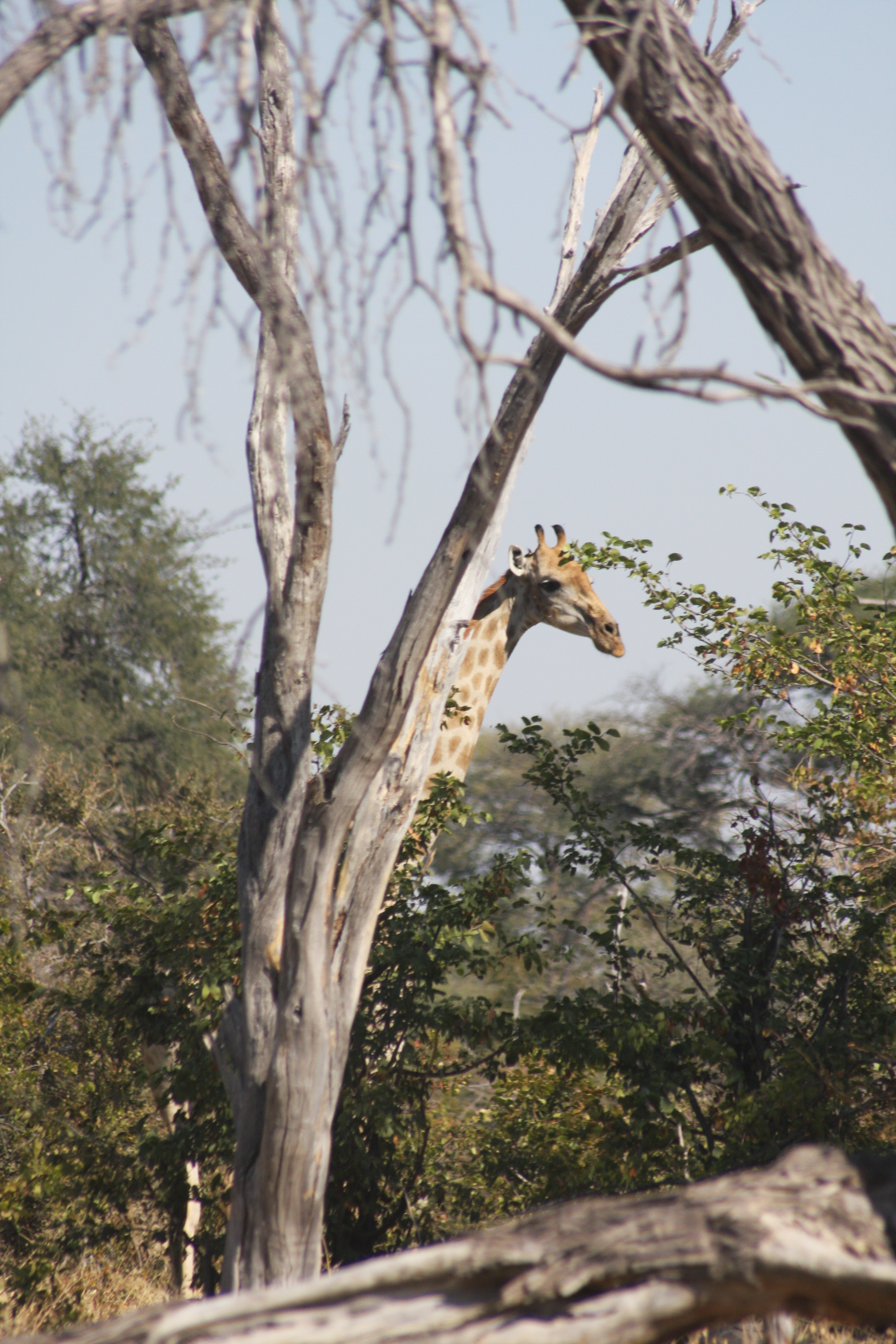
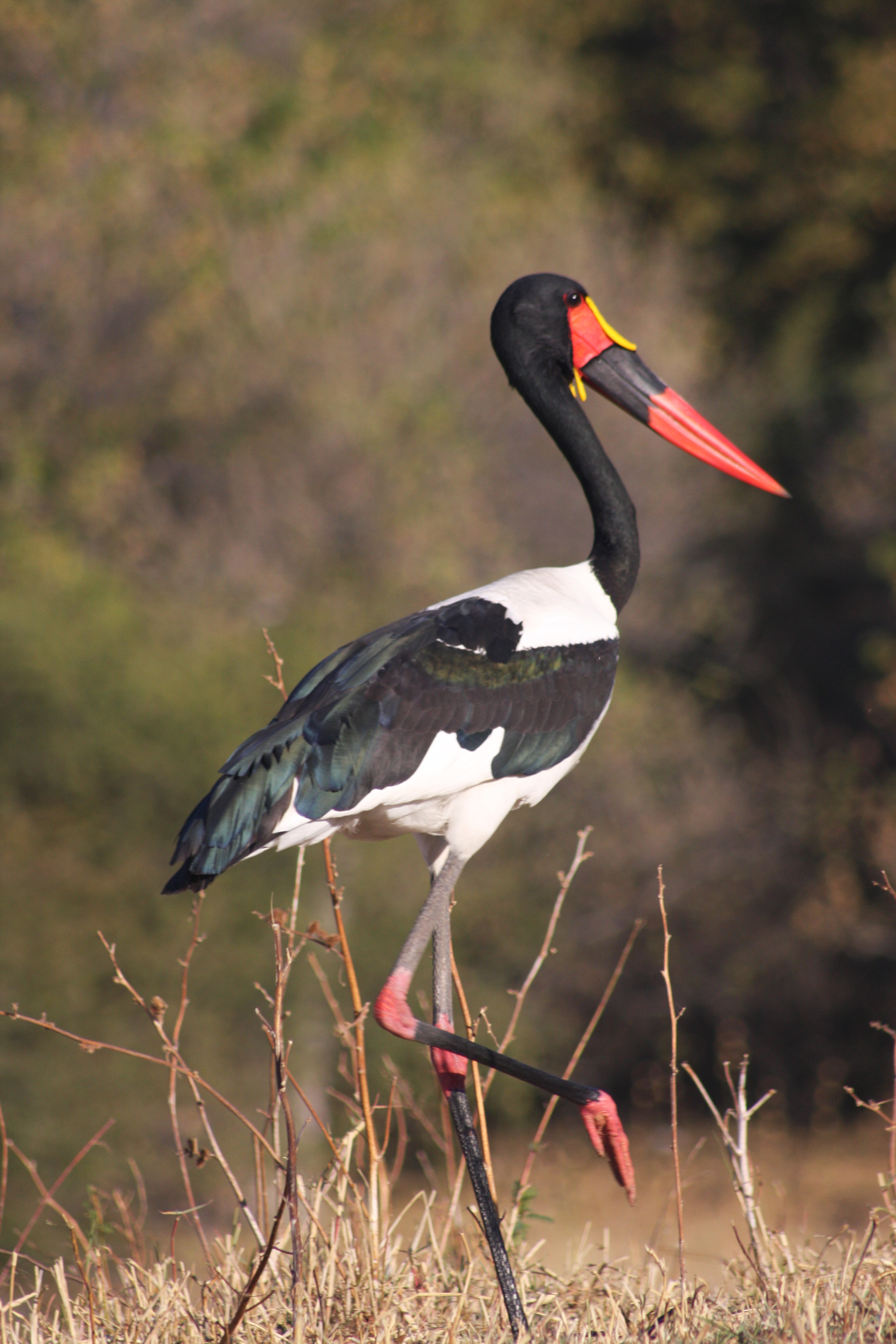
Now you see me… Giraffes can disappear into the bush in a wink of an eye – this one was just outside Moremi Wildlife Park in Botswana – not all game is inside the Park!Addo Elephant Park, Eastern Cape, South Africa – yes, he was that close!A rather splendid stork from a boat trip on the edge of the Okavango Delta, BotswanaVervet Monkey ‘traffic warden’ outside our accommodation at the Island Safari Lodge, Maun, Botswana – is this why little monkey characters, Fingers and Toti appear in my novels?Monitor lizard snapped on the way back from breakfast on the banks of the Thamalakane River in Maun, BotwanaHippos on the Zambezi
Days become weeks, the visits to the basement continue, the treatment-experiment-conditioning, whatever it is, each time washing over you in a stream of detached disinterest; each time, returning to your room and recovering in bedafter another steady shuffle around the green garden with your fellow patients-subjects-inmates where, trapped on this endless treadmill, no-one speaks or makes eye-contact.
Food arrives on a tray – greyish porridge, brownish soup – delivered by the blank-faced orderly; later, a shot-glass of something sweet and very orange; later still, the lights dim and you sleep: is the orange liquid drugged you wonder, as you drift away again.
You request a newspaper for some distraction, but the request’s denied; instead, the orderly brings you a mindless magazine filled with photos of people you don’t recognise; you consider the art of paper-folding, but your fingers won’t cooperate. You study those fingers; your fingernails never seem to grow, still short and neat, just as when you arrived; your hair, as far as you can tell without a mirror, is the same; are you groomed in your sleep?
Another day, and when you return to your room, a TV screen has been installed, high up in the corner, just below the dull red camera eye; the orderly switches it on and just as the picture flickers into life, there’s a commotion in the corridor outside; a siren wails, there are shouts, running feet; the orderly spins around and rushes from your room.
In his haste, he leaves the door unlocked.
Confused? You might be! Read previous episodes of The Facilityhere.
far from the cares of everyday life away from the sorrows away from the strife sitting together on a distant shore watching the tide washing in washing out as the sun descends and the stars appear breathing in breathing out being mindful just being
I’m still not entirely sure how this particular creature hopped into my consciousness to become the eponymous rabbit in my historical fantasy novel, Following the Green Rabbit, but it is he, or at least one of his cousins, that leads my two young heroines, Bethany and Bryony, and their tutor, Mr Eyre, through a portal into the past. Somehow he seemed to fit the bill, since I needed an unusual animal to appear in order to pique Bethany’s youthful curiosity and engage the interest of Mr Eyre’s enquiring mind.
Here’s where the two sisters come across the rabbit for the first time:
They had been silent for a little while, when suddenly they heard something rustling in the bushes by the fence behind them. They looked round to see an enormous rabbit emerge, nose twitching. His fur was grey-brown with a slight tinge of green. He nibbled on a piece of long grass, and then hopped past them. He was so close that Bryony could have stretched out and touched him. He stopped by the first tree and sat up on his hind legs. Then he turned and looked directly at them.
“That’s the biggest rabbit I’ve ever seen. Look at his fur.” Bryony whispered.
The rabbit’s ears twitched. “Do you think he wants us to follow him?” Bethany whispered back.
Bryony laughed. “You’re not Alice.” It was only last year that Bryony had read ‘Alice in Wonderland’ to her.
“But look, Briney.” The rabbit had raised a paw in their direction. “I’ll just go a bit nearer.” She stood up slowly so as not to alarm the creature, then took a few steps towards him.
The rabbit hopped off as far as the next stand of apple trees. He stopped and turned, looking up at Bethany with his dark brown eyes. His left ear bent quizzically. She looked back at Bryony. “I’m going to follow him.”
(Of course, I couldn’t resist tossing in the Alice in Wonderland reference as the prelude to what was about to happen!)
But back to the actual green rabbit…
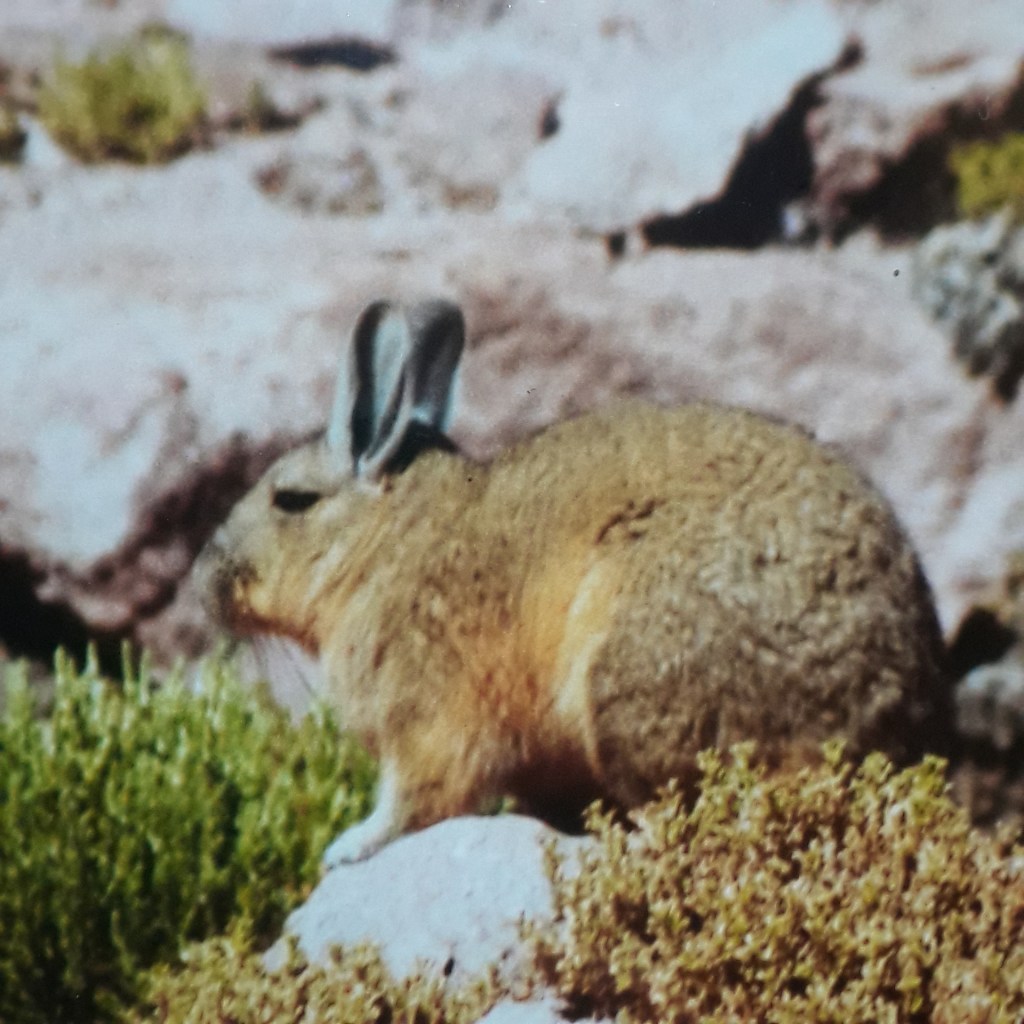
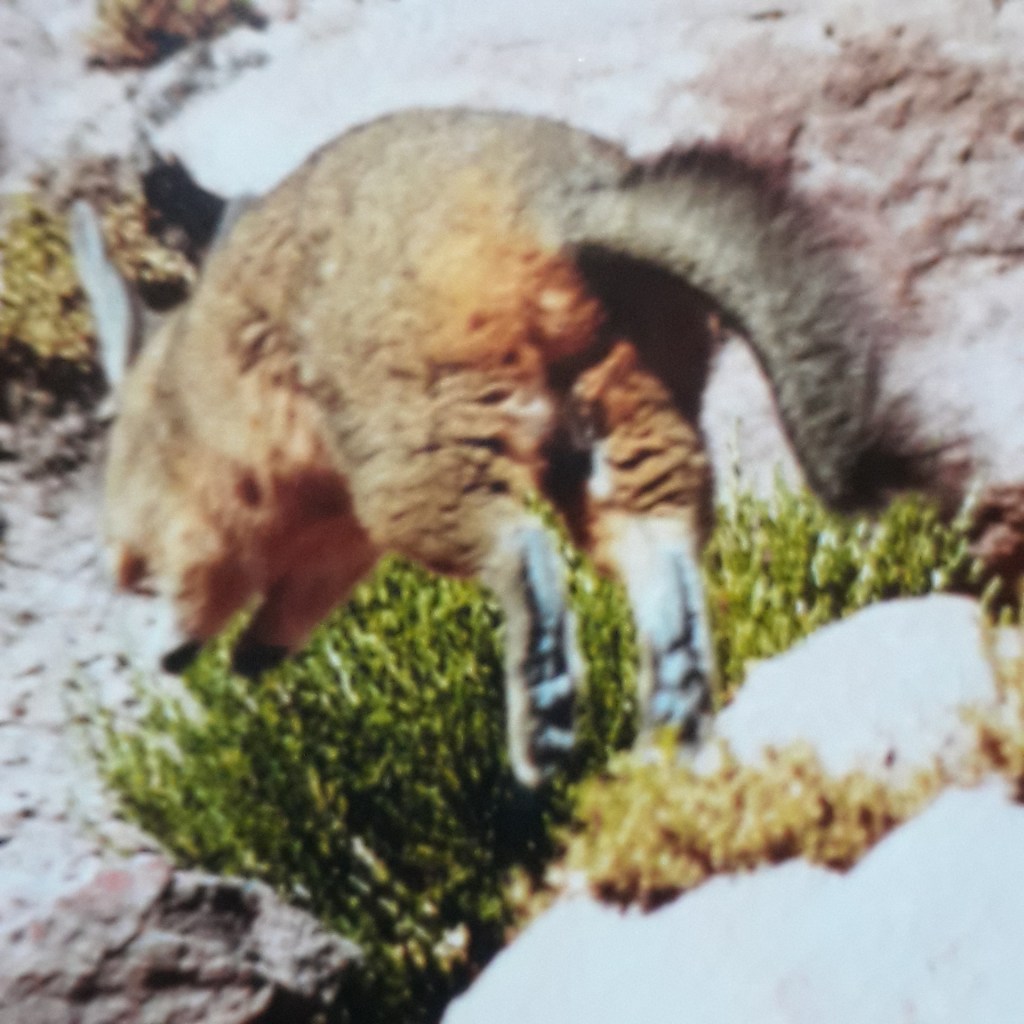
I took the two photos of the rapidly retreating rabbit at the top of the page while travelling on a tourist bus through part of the Atacama Desert in Chile on a trip to the El Tatio Geyser fields, some 14,000 feet above sea level, where the air is very thin and very cold.
Here are two more of my holiday snaps from that trip: one El Tatio geyser and two vicuñas in the Atacama Desert.
Since we would be travelling high, high up into the mountains over the 50 mile journey to reach the geysers from our base in San Pedro de Atacama, at breakfast early that morning I’d taken the precaution of consuming several cups of coca leaf tea as a protection against altitude sickness. On the way back from the geysers, when I saw this huge, green-tinged ‘rabbit’, I wondered if I’d actually consumed a little too much of the coca tea, such a curious creature it seemed to be. Actually, although coca leaves are the base for cocaine production, the amount of the coca alkaloid in raw coca leaves is minimal. Still, a green rabbit it a curious sight, even if you’re only suffering a little light-headedness from descending from the breathless heights of a volcano ring.
In fact, it’s not a rabbit at all. Let me allow Mr Eyre to explain:
Bryony came upon Mr Eyre in the library. He was sitting at the large reading desk which had been placed in the window overlooking the small garden. He was slowly leafing through her papa’s ‘Illustrated book of World Animals’.
He looked up as she approached. “I came across this when I was unpacking your father’s books. I thought I’d see if that green rabbit fellow of ours was listed in here. I’m pretty sure it’s not native to the British Isles.”
Bryony sat at the desk opposite him, watching him turn the pages. “Ah, what’s this?” He turned the page towards her. It was a picture of a large, green-tinged rabbit looking animal. The inscription below read: ‘Viscacha, a rodent in the Chinchilla family found in Argentina, Bolivia, Chile, and Peru’.
“It certainly looks like him, but what would he have been doing in Bluebell Woods?”
“I don’t know Bryony. Maybe there’s a doorway to other parts of the world too?”
Maybe Mr Eyre is pointing us to another adventure? I’m sure he’d jump at the opportunity!
In the meantime, I’ve attracted my own little following of rabbits:
You can do some ‘green rabbit’ watching for yourself. The accompanying music is rather splendid too!
Following the Green Rabbit is available on Kindle and in paperback: mybook.to/GreenRabbit
You’re wheeled into a bland anti-room and the homely-looking nurse murmurs something to the blank-faced orderly who places a restraining hand, gloved in dark rubber, firmly in the centre of your chest; there’s a momentary flash of crackling bright blue light, and the world of sharp senses swims away to be replaced by the sterile hums and beeps of medical machinery.
Later, consciousness returns and you find yourself lying in dimly-lit room, redolent with the unfriendly spectres of duplicity and distrust, hooked up to a machine; probes have been inserted under your skin, like tiny burrowing animals, connected to wires and tubes which snake away into the gloom.
You sense you’re not alone: others are in the room, you can hear them breathing – you try to shift position, but your limbs are leaden and you can’t move your head – a gloved arm reaches over and another shock is administered; you float on the edge of unconsciousness once again.
Someone’s speaking, you open your eyes to the yellow glow of sunlight and the homely-looking nurse smiles faintly and extends her hand to you; others are in the room, filing out through a great glass door into a patch of green garden, where there is even a hint of a breeze; you find your feet and follow.
You shuffle around in a silent circle, noticing that everyone looks alike; then you catch your own reflection in one of the windows – a face you don’t recognise.
A face that’s just like theirs.
Confused? You might be! Read previous episodes of The Facilityhere.
People gather on the streets a bottle’s thrown petrol flares…
Shelves are cleared bags are stuffed snatch a shopping cart fill it to the brim seize a hi-fi grapple with a fridge snatch another shopping cart come back for more!
Grab your phone tell your friends the shelves aren’t empty yet and not a cop in sight…
We might pick up the pieces we might mend fences but it’s going to be a long road back.
The image shows a bust of a man. A dark thick liquid is being poured on it.
Important note: this poem was written from the photo prompt. The fact that it shows a dark liquid being poured on a white figure should not be taken as a representation of the violence that has occurred here in South Africa. The victims of the violence are primarily Black African-owned small businesses whose shops have been destroyed in shopping centres and malls, and the staff who work in the big retail outlets there.
From the very first time I stepped onto the continent of Africa in 2003, that moment when I put my foot onto the tarmac at Cape Town airport, I felt a strange tingle in my bones; I felt I’d come home. So far as I’m aware, I have no family roots anywhere on this huge continent, but nevertheless, I felt an affinity with the land. Even before connections and coincidences led me and my husband to start another chapter in our lives in South Africa, ten years ago, I’d become fascinated with the landscape, the wildlife and the people who’d foraged along the shores and wandered over the wide, scrubby grasslands of the veld.
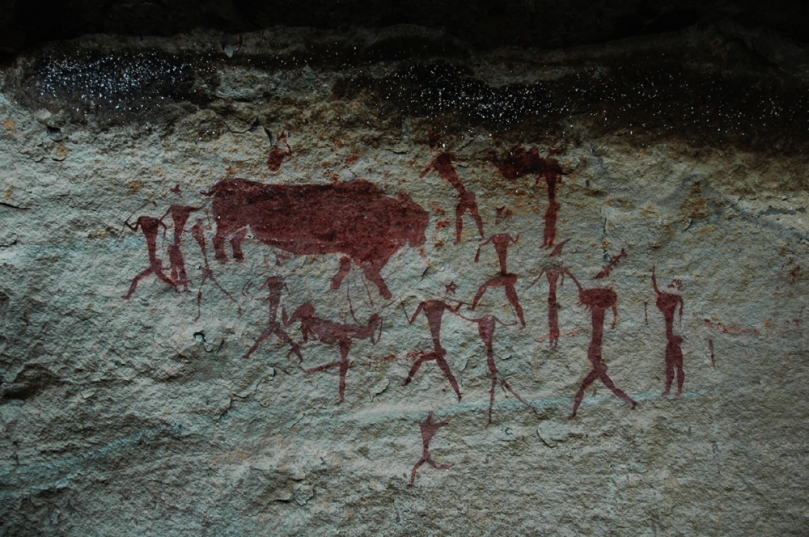
The story of the original inhabitants of what is now the Western Cape is a sad one of exploitation, displacement and dispossession, all so tragically similar to many of indigenous populations across the world. I’ve followed my fascination with those early people, the Khoisan through works of both fact and fiction – there’s a reference list of books I’ve read at the end of this post – but it’s their legends and customs that have increasingly inspired my writing.
A nod or two to those landscapes and traditions have wormed their way into my most recent novel, Song of the Sea Goddess, and the so far unnamed sequel I’m busy with now, but for the most part my inspirations have manifested themselves in some of the short pieces and poems which I’ve shared here on my blog, like my San Man stories last year, and more recently, my micro-fiction series, Owab and Aquila.
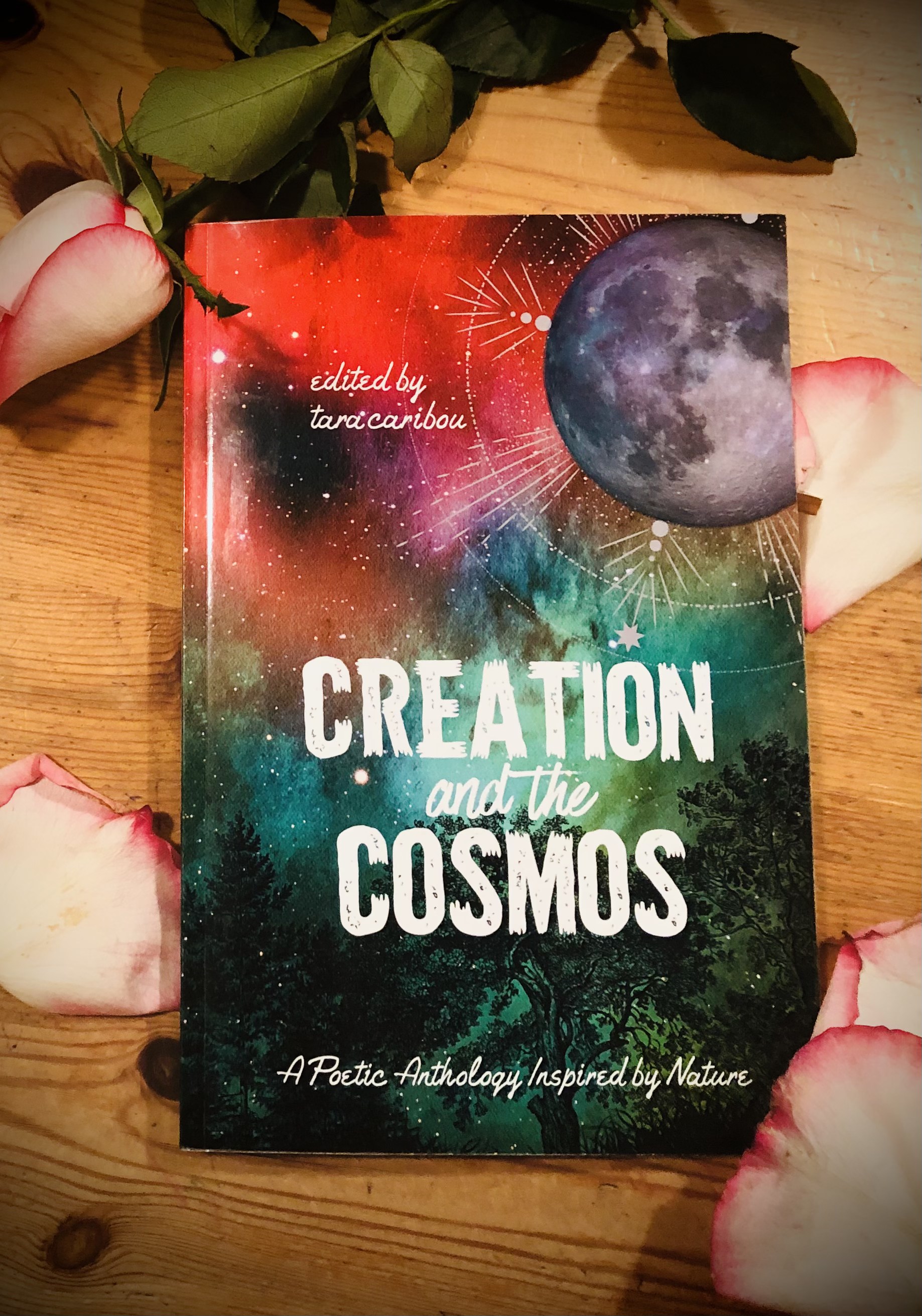
Also last year, when the opportunity arose, I wrote a handful of poems inspired by the legends and landscape of South Africa to submit for inclusion in Creation and the Cosmos – a Poetic AnthologyInspired by Nature, edited and published by the talented tara caribou of Raw Earth Ink. I was delighted to have all five of them accepted and to have my words included amongst the poems and photographs of a such a wonderfully talented group of creatives. Here’s one.
.
Call of the maiden
The breeze-caressed veld sways sending dry waves to break on a distant shore whirlwind dust-devils dance over bare earth rising up to be scorched into stillness.
Evening swells across the veld and the thorn-tree’s shadow reaches out with tendril fingers to caress the smudge-blue foothills.
As daylight fades, the breeze quickens and the new maiden emerges standing on the threshold of the distant koppie in that powerful place between hearth and wilderness.
She turns and kneels at the young man’s side offering herself to him. Limbs entwine and under the eyes of the ancestors they become one.
Darkness closes in and the great African she-moon rises pin-prick stars stab the violet-thick night and now the once-maiden cries out her triumphant ululation echoing across the empty veld.
Through barely-open eyelids you stare up at the red eye of the camera, deliberating – why are they watching? what do they want? – yet, despite the threat, you find yourself beginning to doze off; the lights dim, and the soft mattress ushers you into the peaceful comfort of slumber.
The click of the key in the lock startles you awake, the room brightens, and the door opens to reveal the homely-looking nurse accompanied by a blank-faced orderly, also dressed in white – another unsmiling type – just like the administrator at the reception desk; in fact, they look strangely alike.
Under the nurse’s neutral stare, and consciously not looking at the eye of the camera in the corner, you swing your legs from the bed and sit up, while the blank-faced orderly manoeuvres a wheel-chair into the room and escorts you to it with a firm and forceful grip. He whisks you from the room and along the sterile bright-white corridor, following in the nurse’s efficient footsteps; now, turning a corner, you arrive at a pair of doors which slide open at your approach: an elevator.
The nurse’s broad figure blocks your view of the control panel, so as the elevator descends and remembering your room is seven floors up from ground level, you carefully count as floor after identical floor flits past the vision panels in the dull metallic doors.
Ten floors down, the doors open into a dark void; a scent, reeking of menace, fills the air.
Confused? You might be! Read previous episodes of The Facilityhere.








 luna's on line