Little Malice: the prequel

The Book lunasonline Voynich more Plants Credit Yale University
Credit: Yale University

From my Flash Fiction collection

I was sent to the Valley in my fourteenth year. I was given a little attic room and assigned as apprentice to the Herbalist beyond the Green.

She set me to work in the Storeroom, where I organised the shelves, made labels and lists. She was impressed with my lettering. Gradually I started to learn Herb-Craft: where to gather the freshest ingredients, what to plant and when to harvest, recipes for teas and tinctures, poultices and potions.

A year later, following the midsummer feast, she put me to work on the Book. I copied out new recipes, made illustrations, noted where and when certain plants could be found.  I began to assist in the Dispensing Room. She was pleased with me and with my work.

I learned that certain things displeased her. If she found me chatting too long whilst I was dispensing remedies, she would stand at the door, arms folded, tapping her foot. My friends soon took the hint. Or if she saw me spending time at a particular market stall, she would take me firmly by the elbow telling me to ‘come, leave that now’.

I worked with my pen and brush in the Storeroom at a little desk among the wooden shelves on which the flasks and jars were kept neatly in rows. Even on the hottest of days the Storeroom doors remained shut. No prying eyes were tolerated; the work was secret. I was sworn to keep those secrets.

One afternoon, I’d made myself a cup of herbal tea using leftovers from a poultice. She came in and sniffed my teacup. “What is this?” she asked. I explained. “Is it in the Book?” “No, it but was only a handful of leaves.” Her eyes flashed, “There must be no omissions from the Book.” She stabbed at the cover with fingers clenched and walked out.

Two years passed. My knowledge grew. I followed her rules; made sure she had no cause to admonish me. She taught me a little rudimentary Spell-Craft and the Storeroom prospered as never before.

One morning in late summer, when the dew was still fresh on the ground, I took my basket up to the head of the Valley to the source of a little stream I knew. There I found newly growing belladonna and wolfsbane. I picked a sprig of each and hurried to back to the Storeroom.

Later that afternoon, I settled down at the little desk with my brush and pen and my new specimens. I opened the Book and turned to the poison plants section. But it was missing. I checked again, carefully, page by page, but it was as if the pages had never existed.

I hurried over to her little house and called her. She followed me slowly and sat down at the desk. I showed her where the missing pages should have been; how they seemed to have disappeared into thin air. I thought she’d be cross and give me that look, so I prepared myself. But she looked up at me and said “Never mind now.” She laid her wrinkled hand on my arm: “Go home; I’ll see you in the morning.”

The Storeroom was unusually busy the next day and my morning was spent making up and dispensing remedies. It was only in the afternoon that I took the Book down. The moment I opened it, I could see something was wrong. Strange symbols had been written in the margins and there were untidy blots and crossings out. I didn’t understand.

I heard the Storeroom door open. She appeared in the doorway and came over to the desk. “Something’s happened to the Book,”’ I said, showing her.

“Only you use the Book. No one else has touched it.” She brought her face close to mine and I saw pure hatred on her face. “Why have you done this?”

“I haven’t done anything.” I felt myself starting to shake. I knew I hadn’t done anything. I stared up at her. “It wasn’t like this yesterday.” My stomach churned under her gaze. “We looked at it together, remember? The missing pages?”

“I know you did it.” Her voice was like gravel.

I stood up, facing her across the little desk. I held her stare; not this time, I thought. There was a burning smell. I looked down. Smoke was rising from the edges of the Book. The paper began to curl and suddenly the pages ignited. She slammed the Book shut.

“Go!” She pointed to the door. “Just go!”

I grabbed my basket and cloak and fled towards the Green. I looked back just once. There she stood, framed by the doorway. She glared back at me for a moment; then she slammed the Storeroom door shut.

I never went back. I avoided that part of the village and only went to the market during dispensing hours when I knew she’d be occupied. I could never rid myself of the memory of the expression of loathing on her face, or the power I’d felt that moment when the Book had ignited. I had been changed forever.

©2018 Chris Hall

Read what happened after that: Little Malice and Little Malice 2
About poisonous plants


Man on a mission

Man on a mission flash fiction lunasonline

Sanchez rises early. He dons his trench-coat, pulls on his hat.

Sliding stealthily through the silent streets, a dark, fast-moving, shadow. Hat pulled down, collar turned up, he passes through the checkpoint unchallenged. Now he’s in the ‘other’ city.

He’s closer now. He slows down and looks around. His eyes flick left, flick right. Careful, as he watches comings and goings of the grey-clad people. He times his move, then scurries across the square. He waits hunched in a doorway. A clock strikes.

He hears the click-clicking of heels on the flagstones; getting closer. He glances at the reflection in the window opposite. He tenses, wired for action. The woman draws level with him.

He springs out, reaches into his raincoat, pulls out a single red rose. He hands it to her. She smiles.

Then he’s gone. Mission accomplished.

©2018 Chris Hall

PR Failure

Lilac Breasted Roller by Nigel Whitehead lunasonline
Lilac Breasted Roller ©Nigel Whitehead

“It had all been going so well,” said the Lilac Breasted Roller to his mate. “Everyone thought we were the National Bird of Botswana. Even though there’d never actually been one.” The bright coloured little bird sighed heavily. “It was such a PR triumph just letting all those safari visitors think that.”

“I know,” replied the female. Her wings drooped.

“But now the Kori Bustard’s been given the title. It’s official.”

“That bird’s not nearly as pretty and charming as us,” she said flapping her bright turquoise wings.

The male sighed again. “You may as well close our Twitter account.”

©2018 Chris Hall

https://www.facebook.com/BirdlifeBotswana/posts/252210624903129

Kori Bustard
Kori Bustard ©Jody de Bruyn


Log jam

log jam lunasonline

From my Flash Fiction Collection

‘Okay lads, let’s get going, the tide’s turning.’ The foreman shouted to the gang of stevedores standing at the quayside. The log vessel was docking. Ropes were thrown and secured to the moorings; shouts were exchanged between the men.

Young Eddie Stevens entered the cargo hold immediately it was opened. Jimmy McCabe was right behind him. ‘Wait, Eddie. We need to get the ropes,’ shouted Jimmy. Too late, Eddie was already scrambling over the slippery stripped logs. He lost his footing and, as the logs turned in on themselves, Eddie was sucked down like a towel in a mangle.

Jimmy tied a rope around his waist, throwing the other end to Joe Taylor. He scrambled to where Eddie had been swallowed up. Glancing behind him he eased himself down. The hold was deep and dark. The air felt thick. He called out to Eddie. No response.

Jimmy twisted and turned through the narrow spaces between the logs. His chest was tightening; his head began to pound. He reached out again and felt something yielding. It was Eddie’s arm. He felt around; found his face, soft like a baby’s. He wasn’t breathing. Jimmy clung on to him. His brain seemed too big for his skull. Jimmy closed his eyes in the dark, warm womb of the hold. His last thought was of his pretty young wife, Marie, his little son and the child Marie was carrying.

***

Marie looked at the clock; half past five. She looked down, Jimmy Junior was playing on the floor with the shiny Dinky cars which Jimmy had brought home for him a week ago. Marie smiled and rubbed her back. She was eight months gone with a little brother or sister for Jimmy Junior. She sat down, sighed and murmured happily, ‘Daddy’ll be home soon.’

©2018 Chris Hall

The Beautiful Game?

The Beautiful Game picture by Dermot Carlin lunasonline
Photo by Dermot Carlin

She’s put out the snacks and brought his beer, chilled, in his special glass (one of them). More beers are in the fridge; she has a pie ready to warm for half-time – steak and kidney – his preferred.

Pre-match build up: pundits pontificate; re-runs, highlights, triumphs and near misses. There is success and then there is shame. Which will it be today? National Pride is at stake, for this is the World Cup.

As she sits, small and submissive on the far end of the couch, she plays a different commentary in her head. Missed penalties, own goals, bad decisions by the ref. The repercussions: cuts and bruises (hers); failure on the field reflected in domestic disappointment.

Predictions are favourable. The odds of a positive outcome are weighed in favour. She weighs up her own odds: win or draw 20 per cent, lose 50 per cent (the chances of a beating).

©2018 Chris Hall

Incidents of domestic violence rise significantly during the World Cup

Little Malice 2

Little Malice 2 lunasonline credit Art Wolfe-Science Source
Source: Art Wolfe/Science Source

She’d taken a dislike to me, made that doll-thing with the pins stuck in it. I stole it from her house while she was out, but she saw me on the way back. She knew.

I tried to make one of her, as a precaution; sure she’d make another one of me. But I couldn’t get the likeness. She didn’t though. Those pains never returned; the ones from the pins. Just that sick feeling whenever something reminded me of it.

Folk in the village cottoned on; others had suffered too. I never said much; smiled, nodded and moved on.

The following spring, I was visited by a crow. He sat on my washing line and looked at me, his head on one side. He came every day. I fed him titbits; told him my troubles.

Other people had crows visit too; the ones who’d fallen out with her.

One spring day more arrived. First a couple; one alighted on the church spire, the other on the maypole – mine, I thought. More came, settling on her roof, on window ledges and door frames, covering the house in a black shroud.

Folk gathered on the village green. Windows cracked, wood splintered. No-one went to her aid. We drifted back to our houses.

Night fell.

In the morning, they’d gone. The little house had been stripped bare. The small, stooped skeleton pecked clean inside.

Some called it a murder of crows. I called it revenge.

©2018 Chris Hall


Little Malice

Little Malice lunasonline

I’d been watching her secretly for quite a while. I knew that she routinely went out at this time and would be gone for a while; that she kept a spare key under the flower pot by her back door.

I crept into the house and listened. But where to look? Where would she keep such a thing?

It was a small house: kitchen, sitting room, an alcove for a bedroom. There it was. I picked it up and examined it: a kind of doll crudely made from sail cloth. Wool defined the features; brown for the eyes, black for the hair. Just like mine.

Two thick pins stuck out of the knees. Gently I pulled one out. My right knee relaxed. Then the left; my pain had gone.

There was a pin cushion on the shelf as well. I knew exactly where those pins had been. I saw the pin holes in the soles of its feet; a nick in the fabric of its dress over the stomach. And there was a burn mark on its left arm. Like the one on mine.

I put it in my pinafore pocket; left the house, locking the back door and replacing the key.

Then I saw her; coming towards me across the village green. Walking it that quick, determined way she had. ‘I know you took it,’ she said, as she drew level with me. Her eyes flashed. ‘I can easily make another.”

So can I, I thought, so can I.

©2018 Chris Hall

The Chosen One

The Chosen One lunasonline

From my Flash Fiction collection

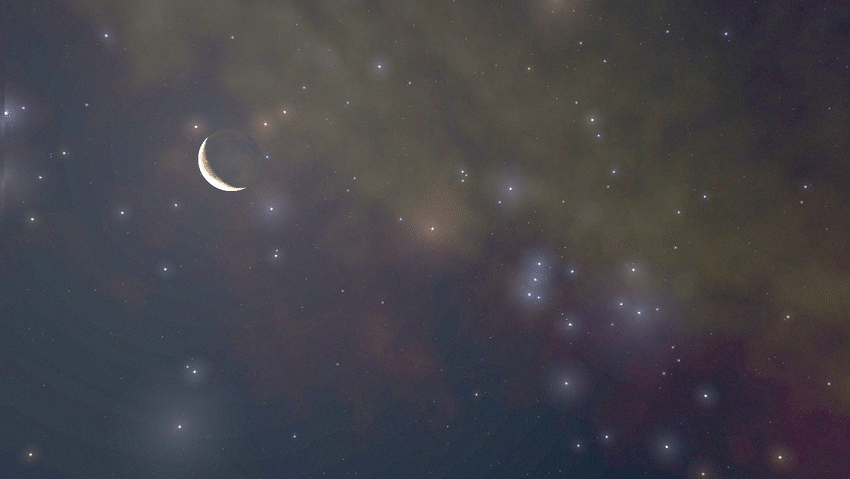
Moonlight shimmers on Jenny’s dress. It is the winter solstice and the night is clear, the bright white moon surrounded by velvet blackness.  Jenny is the Chosen One. Her long golden hair crowned with a mistletoe and ivy garland cascades over her shoulders. Tall and slim, she holds the silver chalice aloft

She must be so cold, Cal thinks.

The villagers stand in a circle holding blazing torches, their faces reflected oddly in the flickering flames. The priest throws back his head and starts to chant. The gathering echoes his words of power. The spell reaches a climax and suddenly there is silence. Jenny puts the chalice to her lips and drinks. It falls to the floor and rolls away as the trance takes hold of her.

The chalice stops at the edge of the circle by Cal’s feet. He picks it up feeling the warmth where his sister had held it.

The priest lifts Jenny onto the stone table. A woman comes forward and takes the garland from her hair, replacing it with a delicate silver circlet. The priest starts to chant again and the woman returns to the circle. The transformation is about to begin.

As the villagers depart, Cal slips away and hides behind the old oak tree. He watches as the priest raises his arms and performs a final incantation before following the line of villagers back down to the valley.

Jenny is alone on the hilltop now. Cal shivers although he is dressed in his warmest clothes.  How can Jenny stand this?

Something rustles in the undergrowth beside him. Cal looks down. A small furry creature looks up at him with bright black eyes. More rustling: a rabbit, now a fox and a fawn.  Forest animals gather around the stone table. The smallest ones climb up and nuzzle up to Jenny. Soon she is covered by a living blanket of fur.

Out of nowhere, thunder; sounding like galloping horses. The noise reverberates around the hilltop. Clouds cover the moon. Cal cowers.

Then a column of the brightest light that Cal has ever seen strikes the hilltop. The creatures scatter leaving Jenny exposed on the stone table. The beam glows and throbs, alive with energy. Cal watches open-mouthed as Jenny’s body is lifted up.

The transformation, Cal thinks. No one has ever witnessed this.

*          *           *

The following morning the priest walks up the hill to bring back the Chosen One. As he looks around to check he is alone he notices something at the foot of the old oak tree. He hurries over. It is the boy, Cal, who picked up the chalice last night. The chalice is still clutched in his hand, but the body is lifeless. The priest shakes his head.

He walks over to the table. The girl is sleeping peacefully, covered in a shiny silver blanket. As he removes the strange material, she stirs and opens her eyes. Bright turquoise: the transformation is complete.  She is truly the Chosen One.

©2018 Chris Hall

Brief Encounter

Steenbok ©2015 Nigel Whitehead On Safari Wildlife Photography

From my Flash Fiction collection

The sun is low in the sky, but the baked-on heat of the day throbs out of the concrete stoep.  The bush sings with insects.  I sip my sundowner slowly, the sharp, grassy taste lingering on my tongue, the liquid cool in my throat.  Condensation beads on the glass and drips drops of fine rain on my bare knees.  Wood-smoke from someone’s early evening braai wrinkles my nose.

The thicket rustles and a tiny antelope appears in the small clearing beyond the stoep.  He sees me and freezes.  I keep still-still not wanting to frighten him.  We stare at each other.  I hardly dare breathe.  He is so close, so wild and timid.  Motionless, our eyes locked together, a minute passes, two…

‘Top up?’ a large hand holding a green bottle accompanies the question.  The little animal starts and skips off into the bush.  The spell is broken.

©2018 Chris Hall

Trading Places

Trading Places lunasonline

From my Flash Fiction collection

John stared at the spreadsheet in disbelief. He placed the sheet inside the file in front of him carefully and looked across the desk at James, his finance director. The man opposite him shifted uncomfortably in his seat and adjusted his tie.

‘It’s…it’s…’ the man stammered, fidgeting desperately with his fountain pen.

‘It’s a total disaster,’ said John quietly. ‘How have you allowed this to happen?’

‘There was a problem with one of the traders were using. It seems that he has been siphoning off large amounts of cash, investing them in high risk stocks in the hope of covering up…’

‘What trader?’ John interrupted.

‘Well, I’m sorry to tell you, but it’s Jeremy.’

‘Old Northrop’s son?’

‘Yes sir, that’s the one.’

‘I don’t believe it,’ John said, shaking his head. ‘Such a bright boy, impeccable credentials and all that…’ John frowned. ‘Does Northrop know?’

‘No-one’s been able to get hold of either of them, apparently.’

‘Apparently? Have you tried to reach him yourself?’ John put his hand out for his phone.

‘Yes, of course, sir. I even tried his wife at home. She’s in a terrible state.’

‘I imagine so,’ said John slowly. Picking up the receiver, he started to dial but then thought better of it and pushed the phone aside. ‘Okay, James, will you contact the relevant authorities.’

‘Already done, sir.’

‘Very well, James, see what you can do in terms of damage limitation.’

‘I’m sorry, sir. The way Jeremy was working, well it was clever, but of course it was unsustainable and when…’

John held up his hand. ‘Stop. I don’t need apologies or explanations. What’s done is done. We all need to work out a way forward.’ John looked down at the papers on his desk. ‘Thank you, James,’ he said without looking up.

James hurried out of the room, closing the door behind him. He strode along the plush office corridor and pressed the upward call button for the lift.

John got up and crossed the thick pile carpet to the floor to ceiling window behind his polished mahogany desk. From 22 floors up the view over the Thames was spectacular. He picked out the office blocks and apartment buildings in which he had invested: the banks, the investment houses and the post-modernist stock exchange building all of which were, or had been, the bedrock of his life. Sunlight sparkled on the river hiding its murky depths and reflecting the imposing buildings which lined its banks representing the city of London’s success.

John too reflected. He had spent so much of his life building up his fortune. He had hardly seen his children as they grew up. Of course they had been sent to the best schools and colleges and enjoyed expensive and exotic vacations, from which John had been largely absent. But nevertheless, he had ensured that while they wanted for nothing, they had not spoilt them in the same way as some rich fathers had. They never were simply given handouts, in some way or another they had had to earn their privileges. Both had taken what John considered unusual careers; his son, a semi-successful sculptor and his daughter a member of the Covent Garden ballet company. He was proud that they did not rely on his money; they had made their own way in the world.

He thought about his ex-wife, who had played her supporting role to him so successfully in the early years. But when the children flew the nest, so had she. He had let her go. He supposed he should have fought harder, but in the end Sylvia had accepted a modest settlement from him and went off to California to join an artists’ commune.

And so, here he was John Sutherland; his investment business all but ruined by the shiny bright son of an old friend. On a personal level the situation was survivable. He still had bricks and mortar assets he could sell. He didn’t need his country house, his New York apartment or his share in the Caribbean resort. Maybe it was time to embrace a simpler life.

John turned away from the window and plucked his jacket from the coat stand. He checked his pocket for his car keys and headed for the lift.

Five minutes later John was easing his silver Audi out of the underground car park and into the early afternoon traffic. He switched the car radio on, drowning out the impatient hooting of the taxi behind him.

Had John lingered over his spectacular view just a little longer, he would have seen James Springer, his finance director, as he plummeted past his office window on the way down from the roof.

On the radio Seasick Steve was singing, ‘I started out with nothing and I still most of it left.’  John was smiling as he tapped the steering wheel in time to the song.

©2018 Chris Hall