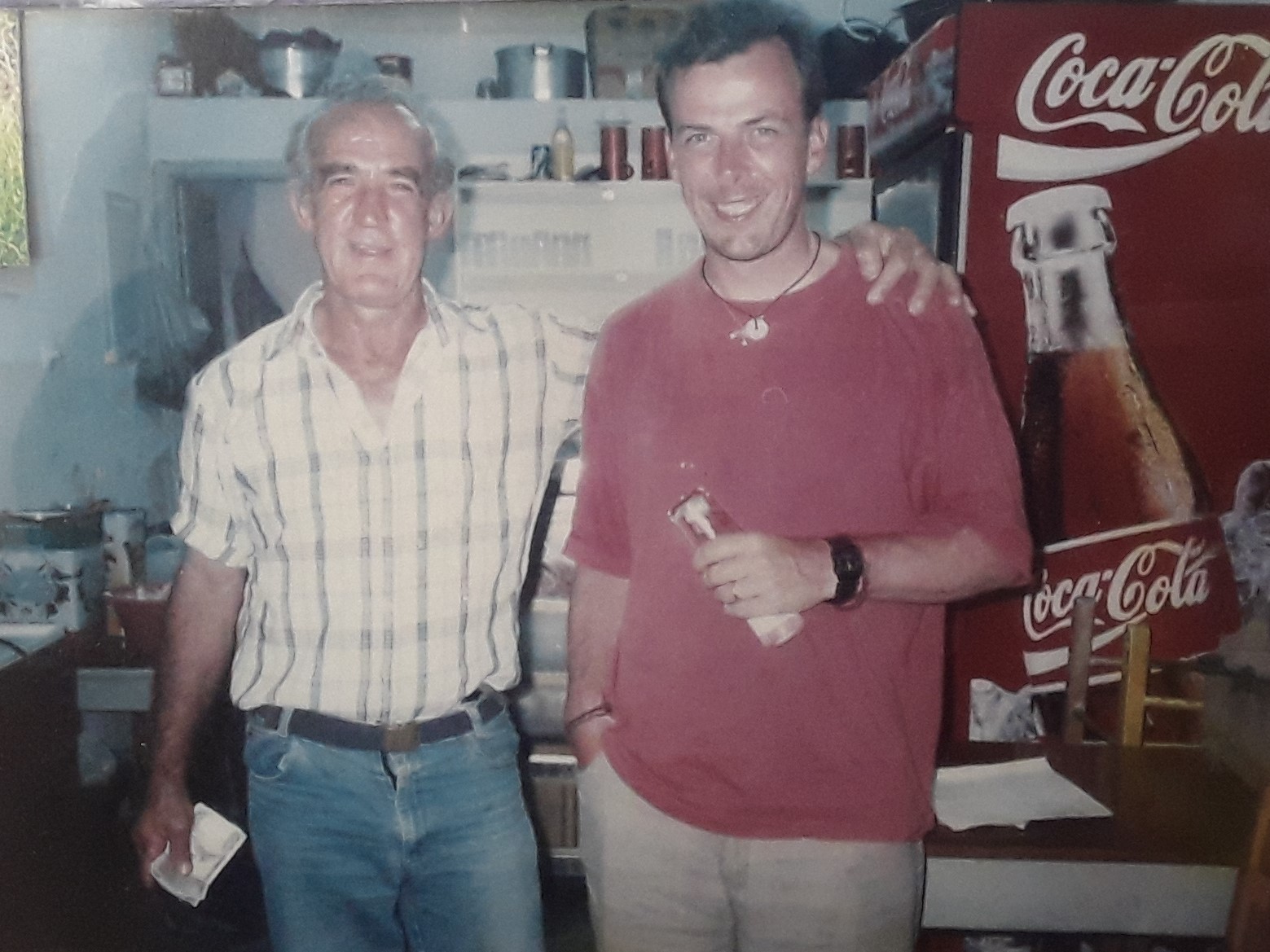
Let me introduce you to these two fine gentlemen: on your right is my husband, Cliff (he had hair then!) and on the left is Andreas, the man who made the best chips we’d ever tasted! It’s because of him that the fictional little town in my novel, Song of the Sea Goddess, has a café owned by a Greek, who makes the ‘best chips on the whole of the west coast’.
Back in the late 1980s and 1990s, we spent almost every holiday island hopping around Greece. I was counting them up, and we’ve visited twenty islands over the years (several more than once) and adding all those visits up, we spent at more than a year altogether in that beautiful country. We’d go at the start and end of the holiday season, two weeks in both May and September, taking any cheap flight we could find. Then, armed with a laden rucksack, a few guide books and book of ferry timetables, off we’d go.
We became increasing adventurous over the years and would try to seek out the less well-known islands and the more off-the-beaten track locations. We avoided the popular places plagued by package tourists, seeking a more authentic Greece (and escaping the Brits on holiday). I’d do my research in the local library, poring over Greek guide books on a Saturday morning after the unavoidable weekend shopping. One year, a photograph of some unusually decorated buildings caught my eye. My reaction? We have to go there!
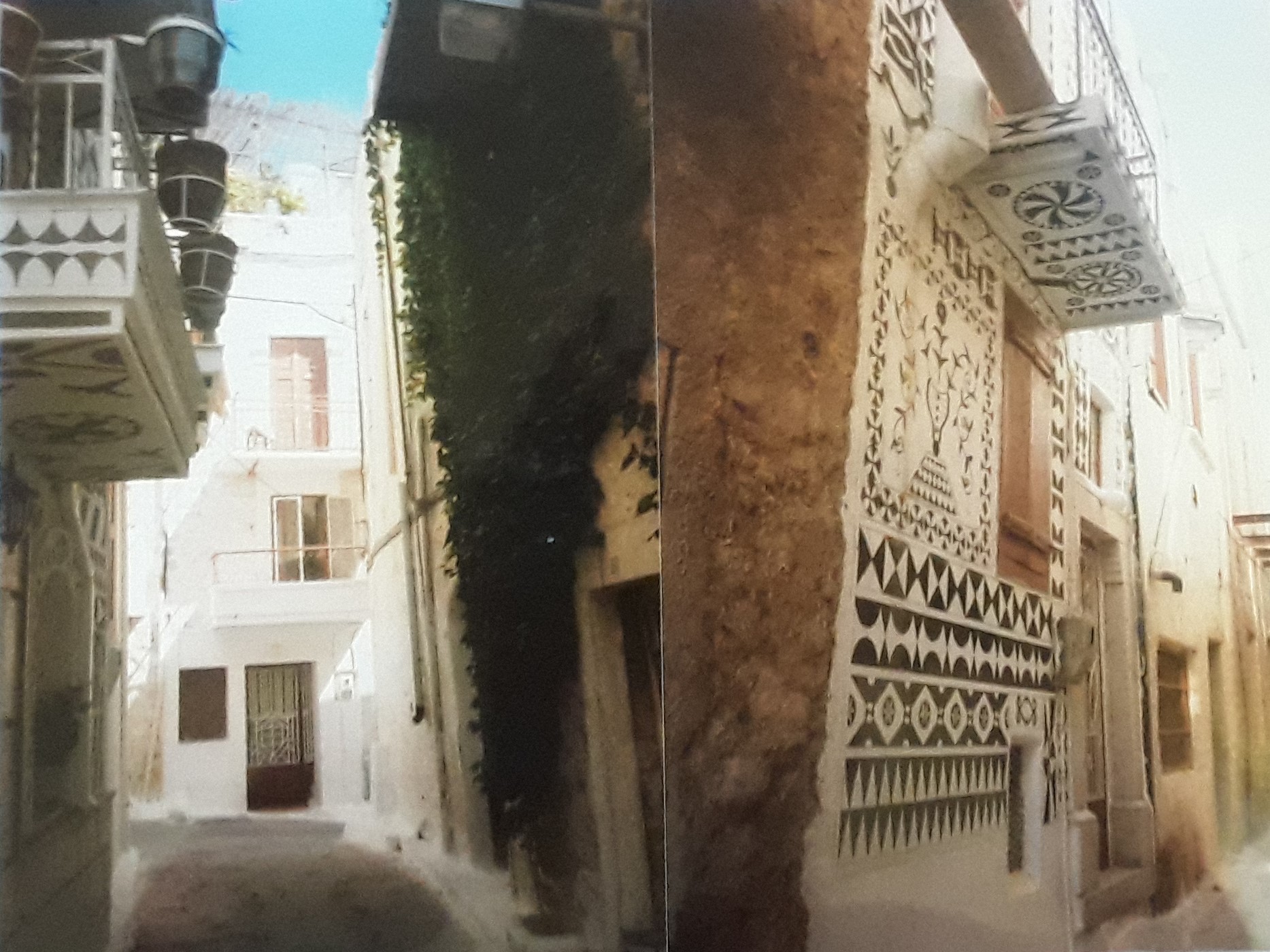
Pyrgi, the ‘painted village’ in southern Chios
And so we did! Here are a couple of photos from our visit. You can just make out the shaded roof garden at the top of the picture on the left. ‘Captured’ by Dmitri off the afternoon bus from the port of Chios, he offered us his rooftop room for rent. Accessed by a rather precarious metal stairway, it had all we needed, including a wonderful view.
On the right is an example of the xysta, the intricate wall decorations that first caught my eye. These adorn many of Pyrgi’s houses and are unique to this medieval village. These patterns aren’t painted, they are scratched into the surface plaster. They are everywhere!
The centre of the village is dominated by a large square, filled with chairs and tables belonging to a handful of tiny bars and restaurants which ring the square itself. In the evening, we found the square was filled with people eating, drinking and chatting while their children played on the periphery. It was here we came across Andreas, who owned the tiniest of restaurants in one corner of the square. His menu was simple, but fresh and delicious – and he made these wonderful chips, served with a generous dollop of tzatziki (thick Greek yoghurt mixed with salted and drained cucumber, garlic, mint and olive oil). Over several evening visits we came to know a little bit about his past, particularly about his time in the merchant navy, an occupation he shared with Cliff’s younger brother.
Spool on to November 2019, when I started writing Song of the Sea Goddess and although I’d not thought about him for years, Andreas suddenly stepped out from the doorway of a building by the harbour in my fictional little town on the west coast of South Africa. He seemed to be very at home and he hadn’t aged a bit!
You can take a little tour of Pyrgi on this clip I found on You Tube:
I hope you enjoyed that. Now, let’s see what my version of Andreas is up to in his little harbourside café.
Excerpt from Song of the Sea Goddess
Later that morning when Porcupine returns to the harbour, Andreas is picking up the battered tin bowl that has been licked clean by the scruffy little dog, which he’s taken to feeding with scraps from his kitchen. He raises a hand in greeting to Sam and Jannie.
‘There’s coffee still in the pot,’ shouts Andreas.
‘Should we tell him about the gold?’ Sam asks as they across the yard.
‘Could be he knows something about treasure like that. He was at sea far longer than I was and he sailed in different waters,’ says Jannie. ‘But I’m not so sure. You know he gossips like no tomorrow.’
Sam shrugs. ‘We don’t have to tell him the whole story.’
‘You mean say it’s something we just heard…’
‘…from a friend of a friend.’
The two men grin at each other.
The two conspirators enter through the back door of Andreas’s little café. Moments later they’re sitting at the counter while Andreas fills two tiny cups with thick, sweet Greek coffee and sets them down on the counter in front them.
‘So what’s new?’ asks the café owner as he resumes his slicing and chopping in preparation for lunchtime. Andreas serves up a simple menu from his native Greece: fried fish, kebabs, chips and salad. He makes the best chips on the whole of the west coast and if you can’t afford meat or fish, you can always dip your chips in his thick, garlicky tzatziki. It is this that he’s busy making.
Andreas frowns as Sam explains about the friend of a friend and the strange pot of gold coins which no-one can touch with their bare hands. The wiry old Greek listens until Sam has finished, then throws his head back and laughs.
‘Well, you must know what that is,’ he exclaims.
‘What d’you mean?’ Jannie asks. ‘I sailed around the South China seas and in the cold waters of the far north, but I’ve never heard of such a thing.’
‘Really? And you’ve never heard of the ‘treasure that can’t be touched’?’
Jannie shakes his head.
‘They say it’s the old gold of Atlantis.’
‘Atlantis?’
‘Yes, you know, the lost city…’
Jannie shakes his head. ‘That’s just a legend. It doesn’t exist.’
Andreas chuckles. ‘Well, gold coins that burn your fingers don’t exist either.” He shakes his head. ‘Come on guys, I’m having a joke with you.’ He pours them a second cup of coffee. Then he notices the coin shaped scar on Sam’s right hand. He points to the scar and raises his bushy grey eyebrows. ‘Don’t tell me. That’s how you got that scar?’ Andreas’s eyes widen. ‘That’s what you were off-loading earlier, is it?’
‘What do you mean?’ asks Jannie. He cocks his head sideways feigning innocence.
‘Well,’ Andreas leans forward on the counter, his chin resting on his hand, ‘when Porcupine first entered the harbour this morning, she was sitting very low in the water. I thought Sam here had made it big. A net full of snoek maybe. But after he tied up the boat, rather than landing his catch, he called you over, Jannie. Then a few minutes later, deep in conversation and looking a little shifty by the way, you were both on the boat and heading out of the harbour.’
Andreas pauses, looking from one friend to the other. He grins. ‘I figured it wasn’t an illegal haul of perlemoen, since that wouldn’t have weighed so heavy. Nor crayfish.’ He wags his finger slowly from side to side. ‘And in any case, neither of you would do such a thing, would you?’
Sam and Jannie remain silent for a moment.
‘Okay then, Sam,’ Andreas says. ‘Where did you find this treasure you can’t touch? And what have you done with it?’
‘Perhaps this landed in the bush when Bethany fell?’ suggested Mr Eyre, holding out the object which he’d just lifted from the buddleia bush.
Bryony shook her head, ‘I don’t remember Bethany having a beautiful bracelet like that, in any case, it’s not the sort of thing people wear unless they’re going somewhere special,’ she took the bracelet from him and held it up to the light, gently unfastening the catch.
The bracelet fell open into two half-moon sections, an inscription ran around the glossy inner rim, written in a language which Bryony didn’t recognise; Mr Eyre peered over her shoulder, trying to decipher the strange script; then it dawned on him: ‘it’s mirror writing, Bryony, look!’
Mr Eyre took out his pocket-watch and opened it, tilting the inside of the shiny silver casing so they could read the inscription: to faraway lands, travel you may, now seek and you will find; Bryony looked up at her tutor, eyebrows raised, ‘What do think, Mr Eyre?’
The bracelet began to vibrate and Bryony began to shake with it; Mr Eyre held onto on her shoulders to steady her.
A moment later they vanished, leaving the buddleia bush swaying silently behind them.
Bryony, Bethany and Mr Eyre first appeared in my historical fantasy fiction novel, Following the Green Rabbit. They’ve been begging to go on another adventure and it looks like they’ve got their wish!
More stories here and we’d love you to join us… just follow the link!
At day’s end when golden rays slide silently into shadow running through the shorter colours of the rainbow while sun’s bright disk is swallowed by dark waves I wonder, what did I achieve today?
Unlike dawn with her sacred dazzling promise of a brand new day and a fresh clean start another tiny chapter of life has closed one more page has turned, waves washing over sand, erasing.
I sit on the sun-worn steps gazing out at the ocean her timeless waves her heart beating and wonder what might tomorrow bring?
The image shows a view of the setting sun over a body of water. In the foreground, you can see wooden steps leading into the water. Grey clouds are drifting in the sky.
Location No. 25 – Anfield, home of Liverpool Football Club
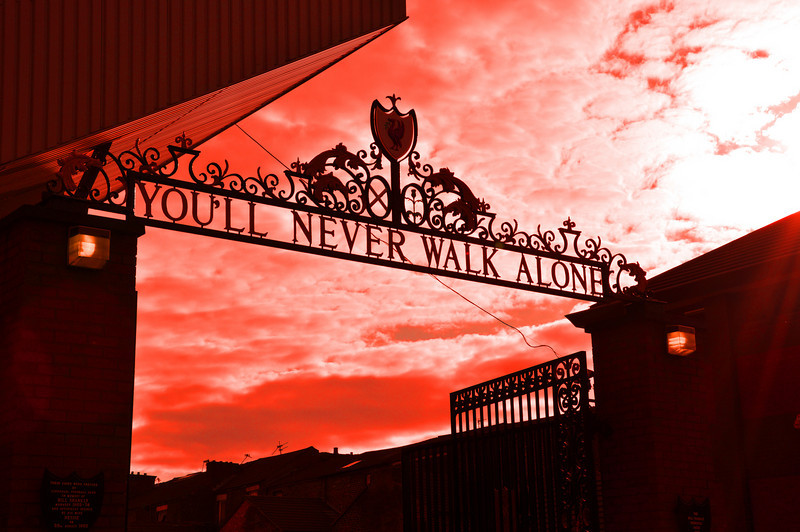
Welcome back to our literary tour through the pages on my novels and, in case you didn’t realise straight away, we’re back in Liverpool, so we must be dropping in on the characters of You’ll Never Walk Alone. Look up, the words are written above these wrought-iron gates, right by where we’re standing!
These are the famous Shankly gates, erected in tribute to Bill Shankly, the manager who brought huge success to the team in the early 1970s. It was during his reign that the club adopted its famous anthem, ‘You’ll Never Walk Alone’. Hearing the fans sing the song at the start of a match or after a hard-earned victory, sends a shiver down the spine. It is that feeling of togetherness and belonging which really what inspired the title of my novel, as my ‘players’ stand together and support each other throughout the narrative. In fact, the book isn’t about football or Liverpool FC at all – just a few passing references and one character’s obsession.
Bill Shankly is famous for the quote: “Some people think football is a matter of life and death. I can assure them it is much more serious than that.” So it is for some in the city but not all, especially Gina, although Gary, her boyfriend is the die-hard football fan.. Here’s his view of the ‘beautiful game’.
Gina rolled her eyes at Gary. Well, what exotic location are we going to tonight?”
“Go for a couple of pints, chippy and back in time for ‘Match of the Day. My ideal night!” Gary turned to Tony Wong. “Here, Tone, have one of your crackers.” Gary proffered the bowl to its owner.
Tony Wong giggled and took the bowl. “Two left, which will you take, Miss Gina?” he said, holding the bowl out to her.
“Mmm, which one predicts I’m going to do something other than watch football on the telly tonight?” She pointed to each of the cookies in turn. “Eeny, meeny, miny, mo.” She picked out one of the cookies and chewed it open. “‘Your passions sweep you away!’ I think that should’ve been Lu’s.”
“Hey, I’m passionate about footy – you should be too.” Gary broke into song: “We’re on the way to Wembley, on the way to Wembley…”
Liverpool – South Africa Connection
Back in 2005, we were entertaining a little group of teachers from South Africa who were on an exchange visit to my husband’s school. As part of their visit we took an organised tour around the LFC ground. Our guide was explaining the importance of the Kop, the stand behind one of the goals occupied by the ‘Kopites’ – the home team supporters. At the time, I didn’t know what the Kop was named for. However, one of our party did. Carmen held up her hand and pre-empted him. You can’t keep a good teacher down!
The Battle of Spion Kop
Spion Kop (Spioenkop) literally means ‘Spy hill’. During the Second Anglo-Boer War, the town of Ladysmith, which was being held by the British, had been besieged by the Boers for a couple of months. The Spioenkop, which was occupied by the Boers, offered a view from the summit for hundreds of miles all around, so the British considered it important to attack and hold it. The British prevailed in the end, but they had lost 340 soldiers before they ended the four month long siege. The new Anfield stand, opened in 1906, was named the Kop as a tribute to the many local men who died during that battle.
It was that exchange visit and the friends that we made, that sowed the seeds that would lead to us moving to South Africa 5 years later.
The Other Team in Town
Before we get swept away by an outpouring of love for Liverpool FC, I must mention the other local soccer team, Everton Football Club, whose ground is only a mile away from where we’re standing. It’s another fine football club, with a long history which goes back even further than LFC’s. Obviously, there is strong rivalry between the two clubs, although it is genial for the most part. In the interests of balance I did introduce a Everton-supporting character: Bob’s Nan. It’s pretty clear where her loyalties lie, even if we never actually meet her.
It’s in the scene below that we first meet her little monkey, Fingers.
~~~~~~~~~~~~~~~~~~~~~~~~~~~~~~~~~~~~~~
Excerpt from You’ll Never Walk Alone
Gary and his mate, Bob, had evidently come into the sitting room as the sound of the pre-match build-up on the TV started blaring out from the other side of her door. Liverpool were playing away to some team or other deemed by the boys to be too far away to attend midweek. It was a regular ritual: Bob would always come round when Liverpool were playing away because followers of Liverpool FC weren’t tolerated at his Nan’s where he lived, his Nan being an ardent armchair Everton fan. On these occasions Lucy and Gina would usually go to the local wine bar or spend the evening downstairs with Cynthia. Tonight they were planning a quiet drink at the nearby Alicia Hotel as Cynthia was out with Connor at some ‘poetry slam’, whatever that was.
She heard the door to the flat open. Even above the sound of the TV Lucy couldn’t mistake the characteristic squeal of the hinges.
“All right, Gina!” Lucy heard Bob’s voice, loud and cheery as ever.
“G, luv!” (Gary) “We got any more crisps?”
There was a pause. Lucy visualised Gina’s expression.
“Fingers ate them.” (Gary again).
Just then Lucy heard something crash to the floor
“What the..?” Gina’s voice rose an octave.
Lucy opened her bedroom door to see Bob plucking a small monkey dressed in a grubby red waistcoat from the coffee table. The large metal bowl which they habitually used for snacks was upturned on the floor in front of the TV surrounded by a halo of crisp fragments.
The creature in Bob’s arms struggled and shrieked in alarm. “Shush lad, easy now.” He turned to Gina, “you’re scaring him.” He stroked the monkey’s head, who’d calmed down considerably in the safety of Bob’s grasp.
“Meet Fingers, girls!” Bob looked from Gina to Lucy and back to Gina. “Sorry about that. Bad manners. Gets excited over food, like.”
“You have a monkey?” Asked Gina, eyebrows raised.
“He’s me Nan’s. She found him down Paddy’s market. She was off to the bingo, like. Couldn’t take him, cos he’s been banned.”
“I wonder why,” said Gina, picking up the bowl.
“It’s a long story, like.” Bob looked down at Fingers and chuckled.
Lucy leant over the back of the couch and stretched a hand out towards the monkey. “Oh, but he’s sweet.”
“Sort of.” Bob grinned at her.
Fingers wriggled a paw from beneath Bob’s grasp and reached towards Lucy’s outstretched hand. He gently grasped her finger in his little paw, looking up at her while chattering softly.
“Looks like you’ve made a friend.” Bob winked at Lucy.
“Can I hold him?” Lucy stretched over to take Fingers from him.
“Okay, but be careful. He bites.”
“I’m sure he won’t bite me.” She took Fingers who snuggled in her arms, his delicate little paws playing with her long hair.
“Why’s he called Fingers?” Gina asked.
“Me Nan named him. I wanted to call him Robin.”
“Why Robin?”
Suddenly Fingers wriggled out of Lucy’s arms, dropped onto the couch and started rummaging between the cushions, chattering away to himself. He had almost disappeared when he popped back out again. With a loud whoop he skittered under the coffee table and disappeared behind the TV. Bob frowned. Moving surprisingly quickly for his sizeable build, he rushed to the TV. Pulling it aside on its casters he grabbed Fingers by the waistcoat and hauled him out. Wrapped around his neck was Lucy’s necklace.
Bethany rubbed her ankle, although the soft moss beneath her had cushioned her fall, she’d still landed awkwardly; she stared wide-eyed at her surroundings: a swathe of swaying bluebells within a woodland glade, each painted with glassy dew; one thing was certain, she was no longer in the London garden where she and her sister, Bryony had been looking for the little folk.
Hearing voices, Bethany looked around to see two small figures, clad entirely in green, approaching – ‘look, brother,’ one said, ‘the golden-haired child, after all this time’ – the other replied, so quietly that Bethany could barely hear him, ‘hush, sister, wait until we’re sure what we’re dealing with.’
Bethany slowly rose to her feet, thankful that her injured ankle was stable, and took a few steps towards them, ‘I think I’m lost, can you help me please?’
The green-clad man glanced up at her and murmured, ‘if she’s come from Other World, we must tell the Owl-King.’
‘Other World? Owl-King? I don’t understand,’ Bethany held up her hands in confusion; she frowned, seeing them staring at them, ‘what’s wrong?’
‘She can’t be, brother,’ the green-clad woman’s face fell, ‘she isn’t wearing the travelling bracelet we left for her.’
Bryony, Bethany and Mr Eyre first appeared in my historical fantasy fiction novel, Following the Green Rabbit. They’ve been begging to go on another adventure and it looks like they’ve got their wish!
It’s my great pleasure to welcome international best-selling poet, Michelle Navajas, to this month’s Launch Pad spot. Some of you will already be familiar with Mich through her blog, where she posts her unique and highly accessible style of poetry and prose with awesome frequency!
So, let’s find out a little bit more about her. We’ll start with her official author bio:
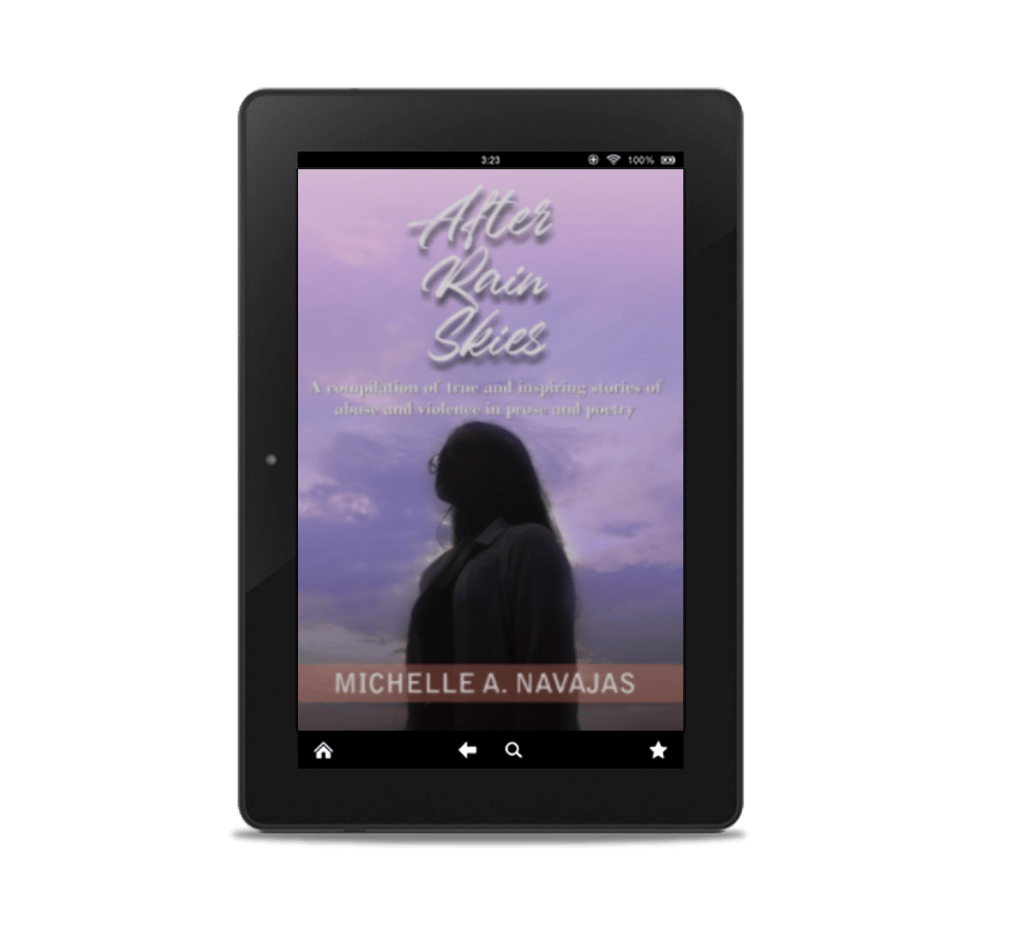
Philippine-born Michelle Navajas, currently residing in Malaysia. Michelle authored the book After – Rain Skies: A Million Stars, for Perak Women for Women Society (PWW) during their Million Stars campaign. It’s a collection of true and inspiring stories of victims and survivors of abuse and violence in prose and poetry.
Graduating with a Master of Education majoring in English in the Philippines (University Of San Agustin – Iloilo), Michelle was a former college professor, teaching literature, speech and oral communication, creative writing, drama, and theatre arts. She is also a graduate of Mass Communications major in Journalism (Centro Escolar University – Manila).
Michelle is active in her writing profession and works as a freelance creative writer.
She blogs passionately at www.michnavs.wordpress.com, where you can find her prose and poetry on love, life, motherhood, and her advocacy on abuse and violence.
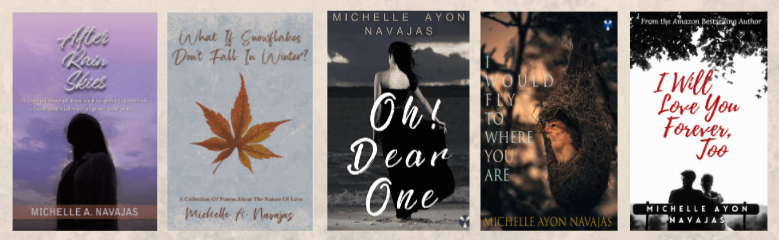
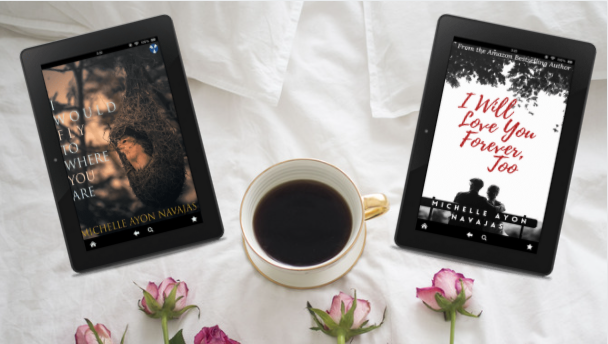
I’d originally approached Mich to introduce her fourth book, I Would Fly To Where You Are, which she wrote during the deepest time of Covid and which was released in May 2021. However, between then and now she’s released her fifth volume of poetry, I Will Love You Forever, Too. Published just a few weeks ago, this latest collection of Mich’s poetry went straight to the number one spot on both Amazon and Kobo on its first day of release: an impressive achievement that most authors can only dream of. Also impressive is the fact that Mich has produced her five books in just two years!
I’ve just finished reading I Will Love You Forever, Too – you can read my review on Goodreads here(or over on the side bar, depending which device you’re using).
Now, let me hand over to Mich now to tell us about her writing journey and how her wonderful poetry books came to be. Over to you, Mich!
~~~
Thanks for having me on your blog, Chris. It’s a pleasure to be here.
Dreams do come true. And it can happen unexpectedly, anytime, anywhere, when you really deserve it. This has been my life’s mantra. I love to take things slowly and carefully and let things unfold on their own by the grace and power of the universe.
I remember, as a little girl, I’ve always dreamt of seeing my name in the newspapers, magazines, or in a book. And I told myself, one day I will make it happen, though at that time I didn’t know how to make it happen, not even how to begin.
My first book, After-Rain Skies, a collection of true and inspiring stories of abuse and violence in prose and poetry, was born in 2019, unexpectedly. Four decades after the conception of my dream.
It was written and published in 2019, with the sole intention of creating awareness on abuse and violence, with the hope of putting an end to the culture of abuse. It was received so well by many that I followed it up with an eBook copy made available via kobo.com.
The pandemic happened in 2020. We were all forced to stay at home and work from home. That’s how I started writing poetry almost every day. Surprisingly too, my long-time readers and followers, love my love poems. It inspired me to write even more.
What If Snowflakes Don’t Fall In Winter? is my second book, a collection of poems about the nature of love. The success of my first book made me realize that I can be a love poet as well. After-Rain Skies taught me that love, more than anything else was what kept these victims going and hoping; their love for themselves, love for their children, their families, friends, and relatives, and most of all, their desire to want to love again and build a life around its seasons. Celebrate how love always changes, just enough to get better and better and better.
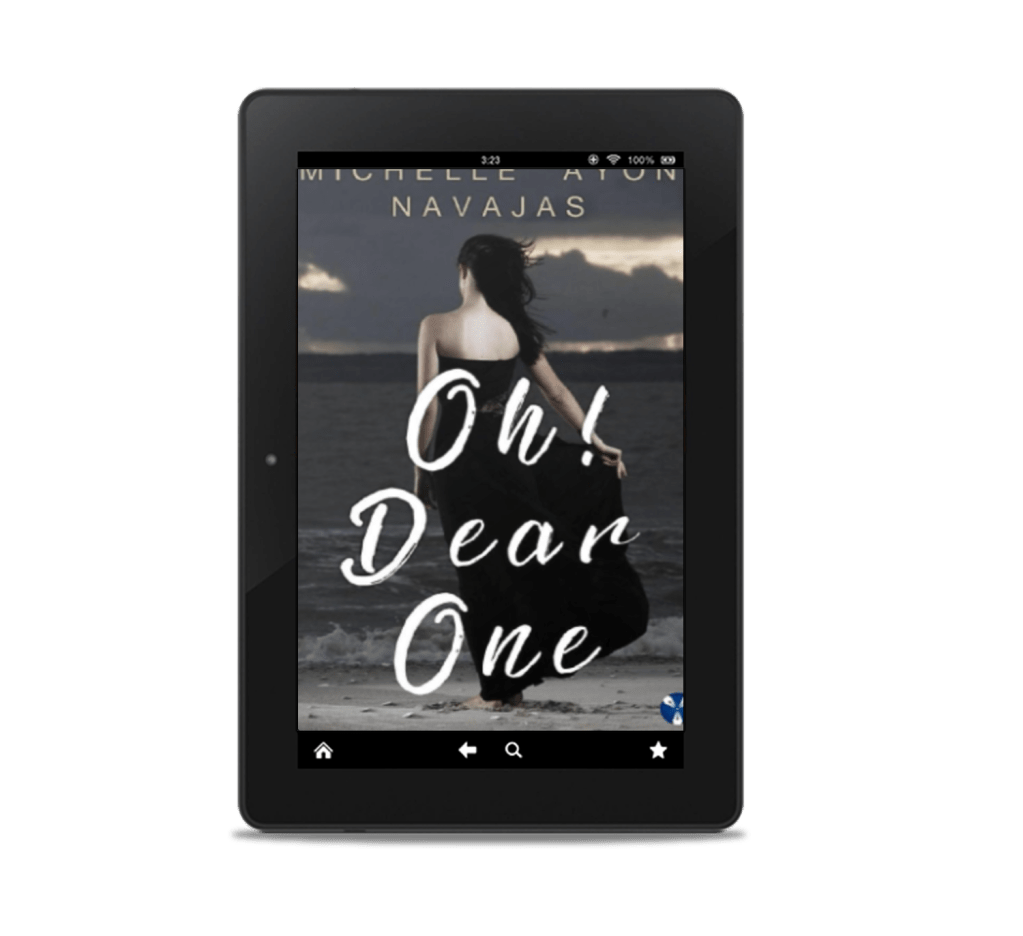
The world stopped during the pandemic. It prompted me to write poetry celebrating humanity’s perseverance and resilience. Oh! Dear One, was born to soothe everyone’s soul amidst the outbreak of a global pandemic.
The outbreak of a global pandemic has led to lockdowns and isolation, which eventually led to the separation of families, loved ones, friends, and colleagues.
I Would Fly To Where You Are is my fourth poetry book, a collection of poetry written during the height of the COVID-19. Reflective of each and everyone’s love and desire to be with their loved ones – the special occasions we all missed to celebrate together like birthdays, anniversaries, baptisms, and many other milestones, and also, reflective of the moment we failed to say our final goodbyes to our loved ones who went ahead of us during the pandemic. This is a collection of poetry on love; love, surviving against all odds.
We celebrate love, no matter how much it hurts and no matter how painful it is.
We celebrate life and love because there is always tomorrow, a better and kinder tomorrow.
My fourth book is definitely an epitome of true love. The kind of love that only gets better and better over the years and that no matter what it takes, it’s the kind of love worth taking the risk, worth taking the big leap, and worth keeping forever.
Finally, my most recent book: I Will Love You Forever, Too, is a compilation of poetry on the greatest love one can ever have. The kind of love that makes you want to write sappy love poems all the time (even if you are not a poet), the kind of love that makes you want to believe in “happily – ever – after” or “dreams – do – come – true”, it is the kind of love that makes you reflect on all of your “what ifs” and “maybes”, it is the kind of love where you will completely miss your beloved, strangely, even though your loved one is gone just briefly, and it is the kind of love that gives you the courage to commit to love forever.
This book also includes selected poems I wrote, which were requested by some of my very loyal readers and followers.
‘Really, Bryony, people don’t just disappear into buddleia bushes,’ Bryony’s papa frowned his irritation, ‘I always thought you were the sensible one,’ he tapped his cane on the floor, something he did when he was unimpressed, ‘stop playing games and tell Bethany to come out from wherever she’s hiding.’
‘You believe me, don’t you, Mr Eyre,’ pleaded Bryony, watching Papa glare at her tutor. Mr Eyre was about to speak when Papa, Donald Goodwin of HMDS*, cut in: ‘and I’d thank you not to encourage such nebulous ideas in the girls, Eyre,’ he growled, stalking into the hallway.
‘Come, Bryony, if we’re going to search for young Bethany, we should start from where you last saw her,’ Mr Eyre extended an arm to shepherd his charge out into the garden, grabbing a cane from his employer’s collection, which was stored in an elephant foot stand, a souvenir from Goodwin’s service in India.
Mr Eyre advanced across the lawn and began to poke about in the buddleia bush; the cane snagged something in the undergrowth and he crouched down, reaching into the foliage. ‘Aha, what have we here?’ he swiveled round and proffered the object to her.
Bryony eyes lit up.
*His Majesty’s Diplomatic Service (the year is 1912).
Bryony, Bethany and their wonderful tutor, Mr Eyre first appeared in my historical fantasy fiction novel, Following the Green Rabbit. They’ve been begging to go on another adventure and it looks like they’ve got their wish!
Your portal to more Six Sentence Stories awaits you here!
The wheel spins which one will win? how much has each invested? This week’s wage a watch, a car? Too much, for sure don’t doubt it. The stakes are high their dreams are huge the risk of loss is greater. Don’t bet your life on the draw of a card for only the house always wins.









 luna's on line