Darkness comes early on these winter days colour drains from bleached frigid skies cobalt tints bleed to shades of stone dripping into gun-metal water remorseless, brutal devoid of hope.
Darkness crowds in on these winter days warmth leaches from dwindling vistas landscapes recede, horizons narrow care-free life flutters out of reach fading to remembrance of times past.
A glimmer remains on these winter days a single shaft of sunlight reaches out to dispel today’s sombre skies one ray of honeyed promise for a golden new tomorrow.
On our literary tour this week we’re going on a little time-travelling detour. Let me take you back to my school-days when I deftly managed to avoid a week’s work experience by wangling my way onto a historical workshop run by a local theatre group.
There were about 10 of us from our all girls grammar school, and we were about to be transported to the time of the English Civil War, accompanied by a handful of enthusiastic actors, who were keen to recreate the correct conditions for our plight under the iron fist of the Royalists who held the walled City of York.
The historical details were somewhat lost on me, but the story was that our fathers, fearful for our safety, were sending us out of the city to an unspecified rural location, were we would conceal our identities as daughters of prominent Parliamentarians and assume the roles of farmer’s daughters.
There were various preparations including the fitting of period costumes and, for the sake of historical accuracy, being urged not to wash or wear modern undergarments (which of course we ignored). Then the following day, with minimal baggage and concealed toothbrushes, we were whisked away to the past in the theatre minibus.
We were undoubtedly too compliant for young ladies of the time thrown into such a situation, but eager to get into our roles we got down to work. There was much peeling to be done. I chiefly remember the potatoes and onions. The onion skins were boiled up to make a dye for some rather malodorous sheep’s wool, which was marinated overnight, and came up a vibrant shade of yellow the following day. We learned to card and spin wool. My spinning was woeful and I was sent to the kitchen to busy myself about the potatoes again. I learned to milk a cow which was brilliant, unlike the subsequent butter-making. Churning is absolutely arm-aching.
We were also shown the hayloft where we would hide should anyone in authority from the ‘wrong side’ come calling. Little did we know that the following evening we wouldn’t have time to hide.
The sun was setting and we’d finished our supper. We were all sitting together in the large room at the front of the farmhouse which looked out onto the yard. I chanced to look through the window to see a group of soldiers, wearing high boots and feather-plumed hats, marching towards the farmhouse. They were undoubtedly the enemy. Almost before I’d had time to call out a warning, they were hammering on the door.
They took the farmer into the back room. His wife followed. One soldier stayed guarding the door. We heard punches, screams and cries; furniture was being overturned. If we hadn’t been in character before, we certainly were in those few moments.
Then they emerged. The make-up was very realistic.
The soldiers moved on.
I really don’t recall what happened after that, but what an experience! One on which I was to draw on for a little piece, written about 30 years later, in a response to a writing group prompt: ‘A Scary Moment’. Revised and updated it became the first piece in my tiny collection of short fiction, released in 2018.
~~~
The Day the Soldiers Came
I smile as I watch my mother play with my little brother Tommy on the hearth-rug. My father sits in his chair, still but alert. Suddenly, out of the corner of my eye I detect a movement in the yard. I turn to look. Soldiers, four of them! By the way they are dressed, I know them instantly as ‘the enemy’. My father has followed my gaze as I gasp in fright and immediately he’s on his feet, sweeping up Tommy in the same movement and shoving him in my direction.
‘You know what to do Annie,’ he says quietly. He nods urgently at me and I grab Tommy’s hand and propel him through the kitchen. I look through the window, checking our route to the barn. It’s clear, so I open the door and we slide through and dash into the slatted wooden building. Behind us, I hear the soldiers hammering on the front door, shouting.
Although Tommy’s only little he knows what to do. Just as we’ve practiced so many times in recent months, I help him up the ladder to the hayloft. He doesn’t make a sound as we creep across the creaky boards and hide ourselves in the straw behind the loosely baled hay. We lie there, waiting. We haven’t practised what happens next. Then I hear a scream; I know it’s my mother, although the sound is like none I’ve ever heard her make. Her pain and terror flood my head. I grip Tommy tightly; he’s trembling and sobbing silently. The minutes tick by; I wonder what’s happening in the house. My father is shouting, but I can’t make out what he’s saying. The shouting stops abruptly and I hear the back door slam against the outside wall of the kitchen.
Heavy boots march towards the barn; I bite down hard on my knuckles. A cold fist contorts my stomach as I realise I forgot to drag the ladder up behind us. I hear the soldier’s heavy breathing down below. He’s pulling things over, searching. He approaches the ladder and in my mind’s eye I see him grab the ladder and place his boot on the first rung. Sweat runs down my back. Tommy is rigid in my arms.
There is a loud call from the house: ‘Move on!’ I hear the sound of the ladder clattering to the floor. It settles and there is no sound apart from the blood pumping in my ears. Slowly I get up, my legs are shaking. I grab the rail at the edge of the loft and feel for the rope which we use as a swing when it’s too wet to play outside. Telling Tommy to stay where his is, I let myself down and run towards the back door which is gaping off its hinges.
Inside the house furniture has been overturned and one curtain has been ripped from the window. My mother cowers in a corner. Her blouse is torn and there is blood on her skirt. Father’s face is bruised and bloody. He reaches for her, but she turns her face to the wall.
The English Civil War, 1642 – 1651. Scenes from ‘Cromwell’ with Richard Harris and Alec Guinness, music by The Clash.
A Sextet of Shorts is available from Amazon in paperback and ebook and on Kindle Unlimited
Rivalry for water amongst the creatures of the veld is driven by scarcity, and the pretty acacia-fringed pan is keenly guarded by a bright green boomslang. The uniquely big-eyed tree snake hangs watchfully, waiting for careless trespassers.
The hunters hasten to the precious liquid, heedless of Aquila’s warning. Young Owab runs with his companions, raising his eyes skywards, searching for the great eagle’s reassuring presence.
They jostle for position by the muddy waterhole but thirsty as he is, Owab hangs back; he calls out, anxiously reminding them of the danger.
The serpent slithers unhinges its jaws to strike; the eagle attacks.
Previous episodes of this little African adventure are here.
Photo credit: Pinterest – a beautiful, big-eyed boomslang – not so lovely when it slides past you when you’re sitting on your stoep minding your own business, although it was in a game reserve, so more the snake’s habitat than mine!
Varicoloured, head spinning, ebb and flow below Easy now, no need to go Reflect on your decision. No! Taking my leave now I’m stepping out Gasping, grasping Oblivion.
Image credit: Sean Robertson @ Unsplash The image shows a view of a busy street from the top of a tall building. Down below you can see traffic and pedestrians.
Welcome to the latest stop on our literary tour through the pages of my novels. We’re parking up by this magnificent Chinese Arch as the coach driver has reminded me that we finished our tour of Toxteth with a promise to come back and visit Liverpool’s famous Chinatown. Here we are at the gateway.
Opened on Chinese New Year in 2000, the Arch was manufactured in Shanghai and shipped over to Liverpool in sections together with the Chinese workers who assembled it from 2000 pieces. It stands 13.5 metres (44 ft) high and boasts 200 hand carved dragons of which 188 are ordinary and 12 are pregnant, the meaning of which is to symbolise good fortune between Liverpool and Shanghai.
Liverpool’s Chinatown is home to the oldest Chinese community in Europe. Their sailors were the first to arrive in the city in the 1830s when Chinese vessels arrived carrying silk and cotton. Many more came in the 1860s when the Blue Funnel Shipping Line was established by Alfred Holt, creating strong links between Liverpool, Shanghai and Hong Kong. By the 1890s, the Chinese were setting up their own businesses to cater to the needs of their own community. Many also married local women, often Irish immigrants.
During the Second World War, Liverpool became the headquarters of the Western Approaches which monitored and guarded the crucial lifelines across the Atlantic. Thousands of the Chinese sailors lost their lives to the Atlantic during attacks from German submarines and as part of the British fleet the Chinese sailors played an important role to Britain’s victory in the war. If you ever visit Liverpool, I strongly recommend a visit to the Western Approaches Museum.
Beyond the Chinese Arch is Nelson Street, where most of Liverpool’s Chinese restaurants are concentrated. There was always a brisk lunchtime trade, and I have fond memories of having lunches with intruder alarm reps, customers and colleagues, in particular a surveyor from Malaysia, who was desperately missing his ‘rice fix’. But the street really comes alive on Friday and Saturday nights when people pile in from the pubs and clubs in search of a late night meal.
My favourite of the many restaurants which line both sides of Nelson Street was the New Capital, formerly the Blue Funnel’s shipping and recruitment office, one reason being that I never carried out an insurance inspection of the kitchen! Believe me, there was more than one establishment on Nelson Street that I would definitely avoid. Let’s take a look at what’s on the menu. Looks good, doesn’t it?
Another of my favourite businesses was the Chung Wah Supermarket. Originally housed in a dilapidated three storey Victorian building, which was packed to the rafters and incredibly untidy (and virtually uninsurable), it was fortunately in the process of moving to a purpose-built premises, when I first carried out my inspection. The shiny new building was much more appealing insurance risk. The owner was a charming young man with some very interesting (Triad?) tattoos on his neck and wrists who, following my second inspection, insisted on giving me a lift into town as I’d arrived on the bus because my new company car had rolled off the transporter the previous day and stubbornly refused to start. I did a lot of grocery shopping in his store over the years!
But back to Nelson Street where, next door to New Capital restaurant, is The Nook. Sadly now closed, it was famous for being the only Chinese pub in England, and was a favourite with the Chinese seafaring community from the 1940s. I remember it being dark and dingy, with a pool table in the back room where a load of dodgy-looking Chinese characters used to hang out. The landlady was a very small but formidable woman who called ‘last orders’ in Cantonese. You wouldn’t argue with her or her ‘boys’!
In You’ll Never Walk Alone, I took a little bit of a liberty and placed ruthless Triad boss, Albie Chan’s office on the upper floor of the building. The basement also belongs to him.
Now, imagine it’s night time. It’s dark but the street and pub are still alive with the last of the late night revellers. Our hero, Pierre, has entered the building from the back entry and climbed the stairs to Albie Chan’s office. This is where the trouble really starts…
.
Excerpt from You’ll Never Walk Alone
“Mr Chan, Mr Chan, Mr Chan!” Arms stretched wide open, the man who called himself Pierre Bezukhov strode across the floor, his high black boots raising dust from the carpet. “I have a new proposition for you.”
“Where is the necklace you promised me, Mr Bezukhov?” said the Asian man sitting behind the desk.
Pierre put his hands on the desk and leaned over towards Mr Chan, his long dark hair tumbling over his shoulders. “I’ve found something which I know you’re going to like so much better.”
“I commissioned you to procure a particular necklace. Where is it?”
“I’m afraid I no longer have it.” Pierre walked over to the grimy window. He stared out at the dark Liverpool rooftops. “I found a better home for it.”
Mr Chan frowned. “A better home? I do not understand you.”
“Listen, I have something else for you. Something better.”
“Mr Bezukhov,” Mr Chan said quietly. “I paid you a substantial sum to obtain a very specific item. I will accept no substitute.”
Turning to face him, Pierre reached into the pocket of his long brocade jacket and took out a small velvet bag. He held it up between thumb and forefinger. “Mr Chan, you don’t know what I’m offering. If you just care to…”
Mr Chan banged his fist on the desk. “No!” His eyes widened. “No substitutes.” He looked over at his tall henchman who had been lurking in the shadows by the door. “Ju-long!”
Ju-long stepped forward and smiled revealing two gold front teeth. Mr Chan nodded and Ju-long advanced on Pierre.
“Bring me the ruby necklace. I give you one week.”
“Well, if you’re not prepared even to look.” Pierre shrugged. Pocketing the little velvet bag, he turned back to the window. In one swift movement he threw it open and swung onto the roof below. “Ta-ra, gentlemen!” And he was gone, skittering over the rooftop below and onto the wall of the back-alley, disturbing a cat which yowled indignantly.
“I’ll go after him, Mr Chan. Don’t worry, I’ll get the necklace from him.”
Albie Chan stood up and went to the window. He gazed across the inky black roofs. “Good. Find him and identify any associates he may have. Retrieve the necklace but do not harm him unduly. He may be useful to us.”
“Very good, Mr Chan.” Ju-long bowed and quietly left the room.
You’ll Never Walk Alone is available from Amazon in paperback and ebook and on Kindle Unlimited USA~ UK ~ CAN ~ AUS~ IND ~ the rest of the world
Yesterday the hunters ate only roots and grubs but now, in the fading light, they chance upon a lame bokkie. Hunt and kill are over quickly. Careful for the tinder-dry veld, they make a fire within a ring of stones and each eats their fill, leaving a portion for Aquila, who guards their improvised camp from a hungry howling wolf until dawn spreads her golden fingers.
The sun climbs and the dry savannah shimmers. A green smudge rises from the ripples and the hunters hasten to the acacia-shaded spring.
The eagle calls out Owab attends the warning: beware the serpent!
In case you’re wondering what in the world is going on, the previous episode of this little adventure is here.
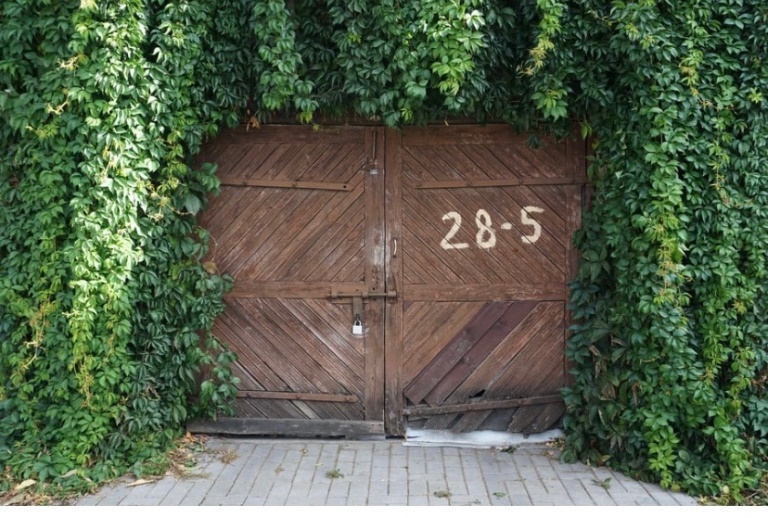
Concealed behind that plain façade silently observing yet unobserved you creep along obscure corridors listening at keyholes, capturing confidences pocketing intrigues and salting them away.
Green mantle cloaked, you traverse the town sniffing out secrets, ferreting for indiscretions licking spoons that stir the pot snatching skeletons from cupboards to one day share and spill.
Nothing escapes your inimical attention under your watch, people scarcely sleep they mind their tongues, mind other people’s but blank of countenance and with eyeless innocence for now your secrets stay safe with me.
Image credit: Victoria Strukovskaya @ Unsplash The image shows a closed wooden gate with the number 28.5 written on it with chalk. The gate is surrounded by thick green creepers.
It’s my great pleasure to welcome international best-selling author, Lizzie Chantree to the first of my Launch Pad spots!
International bestselling author and award-winning inventor, Lizzie Chantree, started her own business at the age of 18 and became one of Fair Play London and The Patent Office’s British Female Inventors of the Year in 2000. She discovered her love of writing fiction when her children were little and now works as a business mentor, running a popular networking hour on social media, CreativeBizHour, where creatives can support to each other.
This week I picked up a copy of Lizzie’sNetworking for Writers. What a useful little book it is, containing lots of useful tips for any author navigating their way though the minefields of marketing and social media.
Lizzie’s novels are full of friendship and laughter, and are about women with unusual and adventurous businesses, who are far stronger than they realise. She lives with her family on the coast in Essex.
Lizzie has a new book out and she can’t wait to tell us all about it. Take it away, Lizzie!
~~~
Thank you for inviting me onto your blog today Chris. I’m excited to tell you all about my latest book, which is called Shh… It’s Our Secret.
The story is about a woman called Violet, who has lots of insecurities since losing her parents at a young age. Violet has been looked after by her older sister, but feels that the local community around the café that she runs, have become her surrogate family.
The café that Violet works in is very run down, but she can see it’s potential. Unfortunately the current owner, who is also her boyfriend, does not see things her way. Violet has a secret that could help the local community and her makeshift family, but first she has to pluck up the courage to leave a man who doesn’t appreciate her, rebuild her confidence and find her voice. Can someone who shies from the limelight, step out of the shadows and show the world how incredible she really is?
The Blurb
Violet has a secret that could change the lives of everyone she knows and loves, especially the regulars at the run-down café bar where she works. After losing her parents at a young age, they are the closest thing she has to a family and she feels responsible for them.
Kai is a jaded music producer who has just moved outside of town. Seeking solitude from the stress of his job, he’s looking for seclusion. The only problem is he can’t seem to escape the band members and songwriters who keep showing up at his house.
When Kai wanders into the bar and Violet’s life, he accidently discovers her closely guarded secret. Can Kai help her rediscover her self-confidence or should some secrets remain undiscovered.
Aquila flies over the desiccated veld, periodically checking on the hunters who march like ants across the dry savanna beneath his substantial eagle wings. Owab is the youngest of the band; it is to him that Aquila carries the mystical connection.
Now in early autumn, the earth still waits for the rains. The ground is dry and the game has scattered. They travel east to the purple mountains in search of the great beast who, with a nod of his gracious head, will call the storm clouds.
Over the parched soil the eagle leads us onward seeking the Rain Bull.
Location No. 20 – Lewis’s Department Store, Liverpool
For this week’s stop on our literary tour through the pages of my novels, I’m inviting you to meet me under ‘Big Willie’, the striking statue which adorns the main entrance to the building which was formerly one of Liverpool’s best known department stores, Lewis’s. The statue was created by Sir Jacob Epstein to symbolise Liverpool’s resurgence following World War II. The bronze figure is 18 feet high and stands on a plinth shaped like the prow of a ship. It’s official title is Liverpool Resurgent, although everyone I know calls him by him nickname!
The store and the statue were very much a part of my student days, when the Saturday afternoon ritual was generally to meet up under said statue, duck into the department store for a free spray of scent from one of the many perfume counters that arrayed part of the ground floor and trot into town for a spot of shopping, or maybe just window shopping, since we didn’t exactly have money to burn.
The store is no more and the building has been converted into an Aparthotel. We can quickly admire the lambanana as we pass through the new dining room. The mural in the background is the original from Lewis’s restaurant the 1950s which was rediscovered during the building refurbishment. More about the original Superlambanana, here.
The Lewis’s building and the ‘Lambanana’ in the new Aparthotel dining room,
The statue, which still presides over the Aparthotel entrance, was made famous in the 1962 song In My Liverpool Home sung by The Spinners. “We speak with an accent exceedingly rare,meet under a statue exceedingly bare…”
Listen to the immortal words and savour the ‘exceedingly rare’ accent which, during the 30 years I lived in Liverpool, I managed both to acquire and discard (most of the time).
Within the pages of You’ll Never Walk Alone, feisty Lucy and her handsome boyfriend, Pierre visit Lewis’s for a spot of unorthodox out of hours shopping, accessing the store on a Sunday (there was no such thing as Sunday opening back in he 1980s) via one of the underground tunnels which run under the city – more about those on a future tour. While they’re dodging the security guards, they bump into another iconic figure of the 1980s, singer and songwriter, Pete Burns.
In those days, still building his musical career, Pete Burns worked at a small but popular independent record store, Probe Records, an important stop off point for musicians and fans of the alternative music scene in Liverpool. Located in Button Street, just around the corner from the more famous, Mathew Street (home of the Cavern Club), it was always packed on a Saturday.
‘He caused a sensation in Liverpool because he was the ultimate head-turner,’ recalls Geoff Davies, Probe Records MD. ‘The nearest I ever got to being involved in a fight was when I stopped some fella beating him up in the shop because he took exception to his appearance.’
He was also notorious for his maltreatment of customers, sometimes throwing their purchases at them because he disapproved of their selection. He was a frequent visitor to the cosmetics counters in Lewis where I remember seeing him wearing his striking all-black contact lenses. Quite a disturbing sight close up.
Probe Records, mid 1980s. That could almost be me with Cliff on an early date!
Now, if you’ve got all your vinyl, let’s return to Lewis’s and join Lucy and Pierre as they start their own spot of shopping. They’re about to go on a trip to the Isle of Man and they need to pick up a few bits and pieces…
Excerpt from You’ll Never Walk Alone
“You’ve been here, you know, out of hours, before?”
“Of course.”
Lucy nodded. “Okay, after you…”
Pierre opened the door slowly and peered into the corridor. They both slipped out and hurried past the metal loading doors which stood opposite the goods lift. There was a flight of worn stone steps next to it. Pierre took the steps two at a time, Lucy following him. He opened the door at the top of the steps cautiously, listening for signs of the security guards. He jerked his head for Lucy to follow him. They emerged next to the curtain which led to the changing rooms on the ground floor of the store. Pierre scanned the sales floor. There was no sign of any security guard.
“Okay,” Pierre whispered. “Keep away from the windows, just in case one of the boys in blue come strolling past. I think the luggage department’s over there.” He pointed. Lucy nodded. “It’s just after the perfume counter…I know this store,” said Lucy. “We often pop in for a free spray of scent!”
Five minutes later they had each picked out a case. Lucy lingered by the perfume counter. Her hand hovered over a bottle of Chanel No.5. Just then, they heard the sound of someone whistling from the far side of the store, close to the main entrance. Lucy turned to Pierre who had been admiring the watches. He gestured to her to get down. The guard was coming up the main aisle. Lucy and Pierre inched behind the nearest counter, leaving their cases at the side of the aisle. The guard’s footsteps slowed; he was only a few feet away from where they were crouching. Lucy realised she was holding her breath.
“Aye, aye,” he said. “Who’s been leaving the stock out of place?” They heard him pick up one of the cases. Just then, his two-way radio crackled into life.
“Receiving, Charlie…over.” There was a pause and more crackling. “Can’t hear yer, Charlie. Where are yer?” They heard him put the case down. “Listen, Charlie, I can’t hear a bloody word on this thing. I’ll meet you by the main doors and yer can speak to me where I can hear yer.” They heard the guard’s footsteps marching back the way he’d come.
“Let’s go,” Pierre mouthed to Lucy. “Keep low,” he indicated with his hand. Lucy nodded and followed him as he picked up the cases and weaved through the side aisles and display stands. They had almost reached the changing rooms when one of the ruffles on Lucy’s skirt caught on the protruding arm of a loaded display stand which carried a selection of rather fetching straw boaters. Lucy felt the material snag. The hats bobbed jauntily as Lucy struggled to free the lace trim from the metal prong.
Just then a man appeared from behind the nearby make-up counter where he had obviously been busy with a selection of products. He grabbed the display stand just as it was about to crash to the floor. As he set it straight, Lucy finally managed to free herself. She looked up to see that he was dressed in tight shiny black PVC trousers and a tight black shirt. His eyes were very strange. No colour, just huge black pupils.
Pierre turned. His face lit up with a smile. “All right, Pete,” he whispered. “Better scarper, the guard’s by the front door.”
The man nodded and headed for the exit by the changing rooms. Pierre and Lucy followed.
“Who’s dat now?” The guard called out. They turned to see him charging up the central aisle, already panting with the effort.
They hurried through the door and ran down the stone steps. As they reached the bottom they heard the sound of a two-way radio coming from the corridor where they had entered from the tunnels. Pierre and Pete looked at each other for a second, then charged the goods doors in front of them. A piercing alarm bell started to ring.
“Run for it,” Pete yelled over his shoulder as he headed for the back alley at the back of the store.
Pierre strode across the road to a graffiti-covered door in the building opposite. He put one of the cases down and turned the handle. The door swung inwards. He and Lucy had just disappeared from view as the two security men emerged on the street. Hands on hips and breathing heavily they scanned the street. Charlie turned to his colleague: “I’m getting too old for this.” The other man held his hands up. “Let’s go sit down; I need a smoke.”
Pierre and Lucy were threading their way through a narrow service corridor. On the other side of the breeze-block wall they could hear the whirr and screech of the underground trains.
“That was Pete Burns, wasn’t it?” said Lucy. “You know him?”
“Sure. He’s a regular to the tunnels. Someone who looks as different as that needs a bolt hole occasionally. I mean, he’s confident and all that, but sometimes people don’t, you know, accept the way he looks and want to have a go at him.”
“We danced to his new record at the club last night, didn’t we?”
“Your DJ friend has good taste. That tune’s definitely going to the top.”
~~~
Let’s let Pete Burns and his band, Dead or Alive, play us out with the very single Lucy’s talking about. Released as a single in 1984, ‘You Spin me Round’ reached No. 1 in the UK in March 1985.
You’ll Never Walk Alone is available from Amazon in paperback and ebook and on Kindle Unlimited USA~ UK ~ CAN ~ AUS~ IND ~ the rest of the world
Photo credits: Liverpool Echo, Wikipedia, Aparthotel Adagio












 luna's on line